
Jamai Shashti
AssameseAlso known as: Sasthi, Jamai Sasthi
Jamai Shashti
About Jamai Shashti
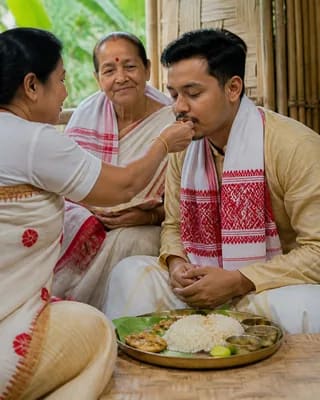
Jamai Shashti is a unique festival celebrated on the sixth day of Shukla Paksha in the month of Jyeshtha, honouring the son-in-law. In Assamese culture, the jamai holds a special place in the family, and this day is celebrated with great warmth.
On this day, mothers-in-law treat their sons-in-law with elaborate feasts, preparing their favourite dishes and offering special gifts. The son-in-law is considered a representative of Lord Vishnu, and the mother-in-law applies tilak on his forehead.
The festival strengthens family bonds and is celebrated with great joy in Assamese households. Extended families come together for the feast, and the day is marked by laughter, storytelling, and the reaffirmation of family bonds.
Vrat Vidhi & Fasting Rules
Mothers-in-law observe a light fast and prepare elaborate meals for their sons-in-law.
- Wake up early and prepare the son-in-law's favourite dishes.
- Apply tilak on the son-in-law's forehead with prayers for his long life.
- Offer gifts and new clothes to the son-in-law.
- Share a festive meal together as a family.
Puja Samagri & Ritual Steps
- Prepare the son-in-law's favourite dishes early in the morning.
- Light earthen lamps and perform the morning aarti.
- Apply tilak on the son-in-law's forehead with prayers.
- Serve the elaborate feast and exchange gifts.
Frequently Asked Questions (FAQs)
The son-in-law is considered a representative of Lord Vishnu, and honouring him brings blessings and prosperity to the family.
The tilak applied by the mother-in-law symbolizes her prayers for the son-in-law's long life, health, and prosperity.
Note: All timings are represented in 24-hour notation in local time of the selected location with DST adjustment (if applicable).
Hours which are past midnight are suffixed with next day date. In Panchang, a day starts and ends with local sunrise.
Recommended Pages
Comprehensive annual Hindu calendar with tithis and festivals.
Detailed month-wise view of lunar tithis and celestial events.
Marathi Panchang and festive dates for the year.
Gujarati Vikram Samvat calendar and festivals.
Telugu calendar and festive Panchangam details.
Tamil solar calendar dates and monthly Panchangam.