
Kali Puja
AssameseAlso known as: Shyama Puja, Dipawali Kali Puja
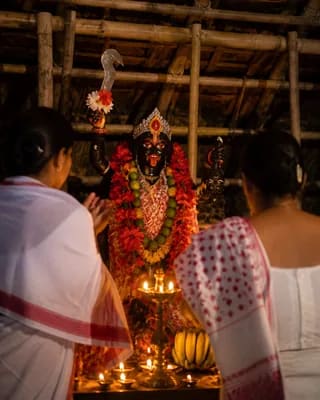
Kali Puja
About Kali Puja
Kali Puja is celebrated on the new moon day of the month of Kartik, coinciding with Dipawali. In Assam, Goddess Kali holds special significance, and the puja is performed with great fervour in Shakti Peithas and households.
The goddess is worshipped in her fierce form, symbolizing the destruction of evil and the protection of the righteous. Devotees offer red flowers, sindoor, and sweets to the goddess, seeking her blessings for protection.
In Assamese tradition, Kali Puja on Dipawali night is considered especially powerful. The night-long celebrations include elaborate rituals, devotional singing, and the lighting of earthen lamps to dispel darkness.
Vrat Vidhi & Fasting Rules
Devotees observe a fast on Kali Puja and perform night-long rituals honouring the goddess.
- Wake up early and take a ritual bath.
- Clean the puja area and prepare the altar for Goddess Kali.
- Observe a fast throughout the day.
- Perform night-long puja and break the fast at dawn.
Puja Samagri & Ritual Steps
- Set up the Kali altar with the idol or picture.
- Offer red flowers, sindoor, and sweets to the goddess.
- Light earthen lamps and perform the evening aarti.
- Maintain the night-long vigil with mantras and prayers.
Frequently Asked Questions (FAQs)
Goddess Kali is the destroyer of evil, and her worship on Dipawali night is believed to provide protection from negative energies.
The night-long vigil symbolizes the devotee's commitment to overcoming darkness and ignorance through the worship of the Divine Mother.
Note: All timings are represented in 24-hour notation in local time of the selected location with DST adjustment (if applicable).
Hours which are past midnight are suffixed with next day date. In Panchang, a day starts and ends with local sunrise.
Recommended Pages
Comprehensive annual Hindu calendar with tithis and festivals.
Detailed month-wise view of lunar tithis and celestial events.
Marathi Panchang and festive dates for the year.
Gujarati Vikram Samvat calendar and festivals.
Telugu calendar and festive Panchangam details.
Tamil solar calendar dates and monthly Panchangam.