
Kati Bihu
AssameseAlso known as: Kati Bihu, Kongali Bihu
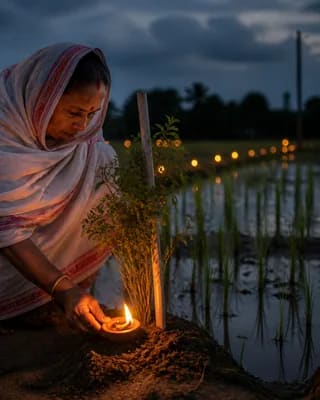
Kati Bihu
About Kati Bihu
Kongali Bihu, also known as Kati Bihu, falls in mid-October during the month of Kati. Unlike the other two Bihus, this is a more somber and reflective festival that marks the period when crops are still standing in the fields.
The festival is called Kongali (poor) Bihu because it falls during a lean period when the previous year's grain stores are running low. Families light earthen lamps along the boundaries of their fields to protect the standing crops.
On this day, farmers walk through their fields lighting lamps, creating a beautiful spectacle across the Assamese countryside. The atmosphere is one of quiet devotion and hope, as communities pray for the successful completion of the agricultural cycle.
Vrat Vidhi & Fasting Rules
Kongali Bihu involves a day of restraint and devotion, with simple food and evening lamp-lighting ceremonies.
Om Vishnave Namah, I offer these lights to the divine for protection of our crops and family.
- Observe a light fast during the day and eat only simple vegetarian food.
- Prepare the tulsi plant area in the courtyard and clean it thoroughly.
- Light earthen lamps around the tulsi pedestal at dusk.
- Walk to the fields and light lamps along the boundaries to protect crops.
Puja Samagri & Ritual Steps
- Clean the tulsi plant area and prepare it for the evening puja.
- Light earthen lamps around the tulsi pedestal at dusk.
- Offer water and tulsi leaves while chanting prayers.
- Take lamps to the fields and light them along the crop boundaries.
Frequently Asked Questions (FAQs)
It is called Kongali (poor) Bihu because it falls during a lean period when previous year's grain stores are running low.
Lamps are lit in the fields to protect standing crops, guide beneficial insects, and ward off evil from the standing harvest.
Note: All timings are represented in 24-hour notation in local time of the selected location with DST adjustment (if applicable).
Hours which are past midnight are suffixed with next day date. In Panchang, a day starts and ends with local sunrise.
Recommended Pages
Comprehensive annual Hindu calendar with tithis and festivals.
Detailed month-wise view of lunar tithis and celestial events.
Marathi Panchang and festive dates for the year.
Gujarati Vikram Samvat calendar and festivals.
Telugu calendar and festive Panchangam details.
Tamil solar calendar dates and monthly Panchangam.