
Nag Panchami
AssameseAlso known as: Nag Panchami Puja, Sarpa Panchami
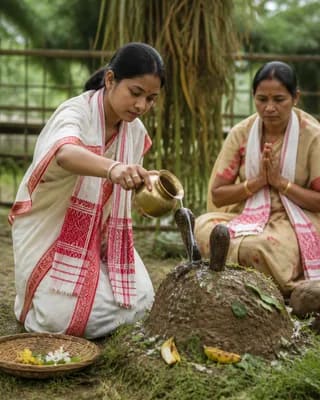
Nag Panchami
About Nag Panchami
Nag Panchami is celebrated on the fifth day of Shukla Paksha in the month of Shravan, honouring the serpent deities. In Assam, where snake worship has deep roots, especially among tribal communities, this festival is observed with great reverence.
Devotees offer milk, flowers, and turmeric to snake images and live snakes at temples and sacred groves. In Assamese tradition, the day is also observed as Sarpa Deva Puja.
In rural Assam, families prepare special dishes and offer them at the anthills where snakes are believed to reside. The festival reflects the deep connection between Assamese culture and nature.
Vrat Vidhi & Fasting Rules
Devotees observe a fast on Nag Panchami and perform milk offerings to snake deities.
- Wake up early and take a ritual bath.
- Visit snake temples or anthills to offer milk and flowers.
- Observe a fast and break it after the evening puja.
- Prepare and distribute traditional sweets.
Puja Samagri & Ritual Steps
- Clean the snake temple or anthill area.
- Offer milk, turmeric, and flowers to the snake deities.
- Light incense and earthen lamps.
- Distribute prasad among devotees.
Frequently Asked Questions (FAQs)
Snake worship has deep roots in Assamese culture, especially among tribal communities, and the festival honours serpent deities for protection and prosperity.
Milk, turmeric, flowers, and sweets are offered to snake deities at temples and anthills.
Note: All timings are represented in 24-hour notation in local time of the selected location with DST adjustment (if applicable).
Hours which are past midnight are suffixed with next day date. In Panchang, a day starts and ends with local sunrise.
Recommended Pages
Comprehensive annual Hindu calendar with tithis and festivals.
Detailed month-wise view of lunar tithis and celestial events.
Marathi Panchang and festive dates for the year.
Gujarati Vikram Samvat calendar and festivals.
Telugu calendar and festive Panchangam details.
Tamil solar calendar dates and monthly Panchangam.