
Uruka
AssameseAlso known as: Uruka Night, Ruka Gorha
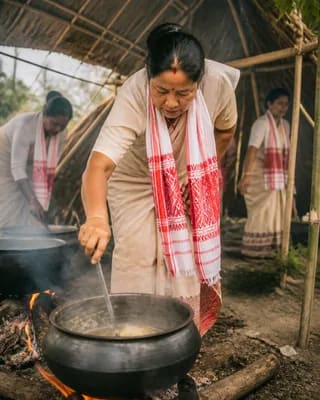
Uruka
About Uruka
Uruka is the night-long celebration observed on the eve of Magh Bihu (Bhogali Bihu). It is a time when community members come together to build the meji and prepare for the next day's feast and rituals.
The word Uruka is derived from the Assamese word for the eve of a celebration. Families and neighbours gather to prepare traditional delicacies like pitha, laru, and other Assamese sweets.
During Uruka night, young people stay awake around the meji structure, singing Bihu songs, telling stories, and playing traditional games. This communal gathering strengthens bonds and celebrates the spirit of togetherness.
Vrat Vidhi & Fasting Rules
Uruka is a night of celebration and community bonding rather than fasting. People feast on traditional delicacies.
- Gather with family and community to construct the meji or bhelaghar.
- Prepare traditional Assamese sweets and savouries for the feast.
- Stay awake through the night, singing songs and sharing stories.
- Maintain the meji fire and keep it burning through the night.
Puja Samagri & Ritual Steps
- Construct the meji or bhelaghar in a suitable open area.
- Prepare traditional Assamese sweets and savouries for the feast.
- Gather around the meji and keep vigil through the night.
- Sing Bihu songs and share stories until dawn.
Frequently Asked Questions (FAQs)
Communities build the meji structure, prepare traditional foods, and stay awake celebrating with songs, stories, and feasting until dawn.
Staying awake through Uruka night symbolizes vigilance and preparation for the coming year, and strengthens community bonds.
Note: All timings are represented in 24-hour notation in local time of the selected location with DST adjustment (if applicable).
Hours which are past midnight are suffixed with next day date. In Panchang, a day starts and ends with local sunrise.
Recommended Pages
Comprehensive annual Hindu calendar with tithis and festivals.
Detailed month-wise view of lunar tithis and celestial events.
Marathi Panchang and festive dates for the year.
Gujarati Vikram Samvat calendar and festivals.
Telugu calendar and festive Panchangam details.
Tamil solar calendar dates and monthly Panchangam.