
Kali Puja
BengaliAlso known as: Shyama Puja, Diwali Kali Puja
Kali Puja
About Kali Puja
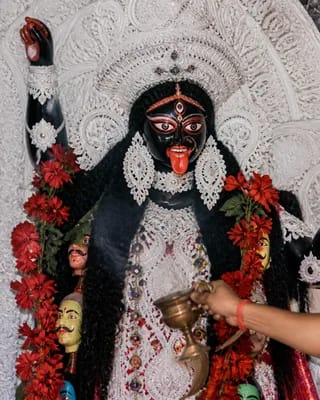
Kali Puja is celebrated on the new moon day (Amavasya) of Kartik month (October-November), coinciding with Diwali. It is dedicated to Goddess Kali, the fierce form of Divine Mother Parvati, who destroys evil and protects the righteous.
In Kolkata, the festival is marked by grand pandals featuring elaborate Kali idols, night-long prayers, and devotional music. The Dakshineswar Kali Temple and Kalighat Temple are major focal points where thousands of devotees gather for midnight worship.
Devotees offer red hibiscus flowers, sindoor, sweets, and rice to the goddess, seeking her protection from evil and her blessings for spiritual liberation. The atmosphere is charged with the sound of drums, conch shells, and devotional songs throughout the night.
Kali Puja is also associated with tantric practices in Bengal, where special rituals are performed at midnight to invoke the goddess's most powerful form. The Kalikhetra tradition and the worship at Tarapith are particularly renowned among spiritual seekers.
Vrat Vidhi & Fasting Rules
Devotees observe a strict fast on Kali Puja, breaking it after the midnight puja.
- Observe a complete fast or consume only fruits and milk during the day.
- Bathe and wear clean clothes before the evening puja.
- Stay awake through the night participating in prayers and kirtans.
- Offer red hibiscus, sindoor, and sweets to Goddess Kali.
Parana (Breaking Fast) Note: The fast is broken after the midnight puja with prasad offerings to Goddess Kali.
Puja Samagri & Ritual Steps
- Clean the puja area and set up the Kali idol or picture.
- Light 108 earthen lamps and incense sticks.
- Offer red hibiscus, sindoor, and rice to the goddess.
- Perform the midnight aarti with dhuno and conch shell.
- Distribute prasad among devotees after the puja.
Frequently Asked Questions (FAQs)
Yes, in Bengal, Kali Puja is the main celebration on Diwali night, unlike other parts of India where Lakshmi Puja is the central ritual.
Red hibiscus flowers are the traditional offering to Goddess Kali, symbolising the life force and the goddess's fierce, protective energy.
Note: All timings are represented in 24-hour notation in local time of the selected location with DST adjustment (if applicable).
Hours which are past midnight are suffixed with next day date. In Panchang, a day starts and ends with local sunrise.
Recommended Pages
Comprehensive annual Hindu calendar with tithis and festivals.
Detailed month-wise view of lunar tithis and celestial events.
Marathi Panchang and festive dates for the year.
Gujarati Vikram Samvat calendar and festivals.
Telugu calendar and festive Panchangam details.
Tamil solar calendar dates and monthly Panchangam.