
Lakshmi Puja
BengaliAlso known as: Lakshmi Pujan, Kojagari Lakshmi Puja
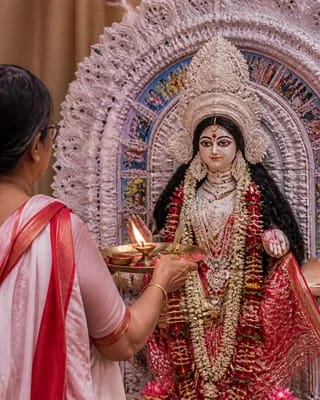
Lakshmi Puja
About Lakshmi Puja
Lakshmi Puja is celebrated on the full moon day of Ashvin (October-November) in Bengal, known as Kojagari Lakshmi Puja. It is dedicated to Goddess Lakshmi, the deity of wealth, fortune, and prosperity.
On this night, homes are cleaned and decorated to welcome the goddess. Women draw alpana (decorative floor art) at the entrance, light earthen lamps throughout the house, and prepare an array of traditional sweets and dishes as offerings.
The goddess is worshipped after midnight, as it is believed that Lakshmi visits clean and well-lit homes on this night. Devotees stay awake through the night, singing devotional songs and playing traditional games like kheror khela (dice game).
Lakshmi Puja is especially important for business communities who pray for prosperity in the coming year. In some traditions, the puja is performed simultaneously with Kali Puja on Diwali night.
Vrat Vidhi & Fasting Rules
Devotees observe a light fast and stay awake through the night for the midnight worship of Goddess Lakshmi.
- Clean and decorate the house thoroughly before the puja.
- Draw alpana at the entrance and light earthen lamps.
- Observe a light fast, consuming only fruits and milk.
- Stay awake through the night and worship Lakshmi after midnight.
Parana (Breaking Fast) Note: The fast is broken after the midnight puja with prasad and traditional sweets.
Puja Samagri & Ritual Steps
- Clean the house and draw alpana at the entrance.
- Set up the Lakshmi idol or picture in the puja area.
- Light 108 earthen lamps throughout the house.
- Offer rice, sweets, lotus flowers, and prayers to the goddess.
- Perform the midnight aarti and distribute prasad.
Frequently Asked Questions (FAQs)
Kojagari Lakshmi Puja is the Bengali tradition of worshipping Goddess Lakshmi on the full moon night of Ashvin. 'Kojagari' means 'who is awake,' as the goddess visits homes of those who stay awake.
It is believed that Goddess Lakshmi visits only clean and well-lit homes. Thorough cleaning symbolises welcoming prosperity and discarding negativity.
Note: All timings are represented in 24-hour notation in local time of the selected location with DST adjustment (if applicable).
Hours which are past midnight are suffixed with next day date. In Panchang, a day starts and ends with local sunrise.
Recommended Pages
Comprehensive annual Hindu calendar with tithis and festivals.
Detailed month-wise view of lunar tithis and celestial events.
Marathi Panchang and festive dates for the year.
Gujarati Vikram Samvat calendar and festivals.
Telugu calendar and festive Panchangam details.
Tamil solar calendar dates and monthly Panchangam.