
Maha Navami
BengaliAlso known as: Navami Puja
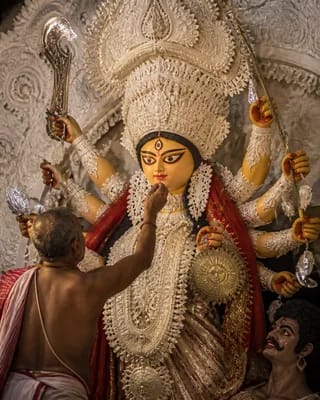
Maha Navami
About Maha Navami
Maha Navami is the ninth and penultimate day of Durga Puja, celebrated on Navami Tithi of Ashvin Shukla Paksha. It is one of the most important days of the Durga Puja festival, marking the final day of worship before the goddess's departure.
On this day, the Maha Aarti is performed with great grandeur at pandals across Bengal. The dhunuchi naach (dance with incense burners) is performed by devotees, creating a mesmerising spectacle of light, smoke, and devotion.
The day is marked by the final pushpanjali offerings and special bhog distribution. Devotees visit pandals to pay their last respects to the goddess before the immersion ceremony on Dashami.
In the evening, the atmosphere becomes emotional as devotees prepare for the goddess's departure. The Maha Aarti is performed with conch shells, drums, and bells, creating an unforgettable spiritual experience.
Vrat Vidhi & Fasting Rules
Many devotees observe fasting on Maha Navami, breaking it after the Maha Aarti.
- Observe a fast during the day or consume only fruits and milk.
- Participate in the morning pushpanjali at the pandal.
- Witness the Maha Aarti in the evening.
- Receive prasad after the aarti.
Parana (Breaking Fast) Note: The fast is broken after the Maha Aarti with prasad offered to Goddess Durga.
Puja Samagri & Ritual Steps
- Perform the morning pushpanjali with red flowers.
- Offer bhog to the goddess and distribute among devotees.
- In the evening, perform the grand Maha Aarti.
- Perform dhunuchi naach during the aarti.
- Receive prasad and pay respects to the goddess.
Frequently Asked Questions (FAQs)
Maha Navami is the final day of Durga Puja worship, marked by the Maha Aarti, dhunuchi naach, and the last pushpanjali before the immersion ceremony.
Dhunuchi naach is a traditional Bengali dance performed with earthen pots filled with burning coconut husks and dhuno (frankincense), creating a mesmerising display of smoke and rhythm.
Note: All timings are represented in 24-hour notation in local time of the selected location with DST adjustment (if applicable).
Hours which are past midnight are suffixed with next day date. In Panchang, a day starts and ends with local sunrise.
Recommended Pages
Comprehensive annual Hindu calendar with tithis and festivals.
Detailed month-wise view of lunar tithis and celestial events.
Marathi Panchang and festive dates for the year.
Gujarati Vikram Samvat calendar and festivals.
Telugu calendar and festive Panchangam details.
Tamil solar calendar dates and monthly Panchangam.