
Maha Shivaratri
BengaliAlso known as: Shivaratri, Mahashivratri
Maha Shivaratri
About Maha Shivaratri
Maha Shivaratri, the great night of Lord Shiva, is celebrated on the fourteenth day (Chaturdashi) of the dark fortnight in Falgun month (February-March). In Bengal, it is observed with night-long vigils and special prayers at Shiva temples.
Devotees observe strict fasting throughout the day and night, spending the night in prayer, chanting of Om Namah Shivaya, and listening to stories of Lord Shiva's glory. The Belur Math and other major Shiva temples in Kolkata hold elaborate celebrations.
The day commemorates Lord Shiva's cosmic dance (Tandava), his marriage to Goddess Parvati, and the occasion when he drank the deadly poison (Halahala) to save the universe during the Samudra Manthan.
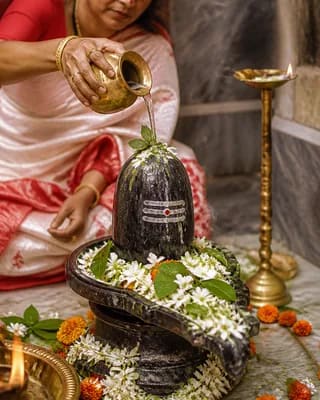
In Bengal, Shivaratri is observed with the offering of Bel leaves (three-leafed wood apple), which are sacred to Lord Shiva, along with milk, honey, and water for the abhishekam (ritual bathing of the Shiva Lingam).
Vrat Vidhi & Fasting Rules
Devotees observe a complete fast throughout the day and night, breaking it the next morning.
- Observe a complete fast without food or water.
- Stay awake through the night in prayer and devotion.
- Visit Shiva temples for the night-long vigils.
- Chant Om Namah Shivaya throughout the night.
Parana (Breaking Fast) Note: The fast is broken the next morning after the morning puja with a vegetarian meal.
Puja Samagri & Ritual Steps
- Clean the puja area and set up the Shiva Lingam or idol.
- Perform abhishekam with milk, honey, and water.
- Offer bel leaves, dhatura flowers, and garlands.
- Light incense and earthen lamps.
- Stay awake through the night chanting prayers.
Frequently Asked Questions (FAQs)
Maha Shivaratri commemorates several events in Lord Shiva's life -- his cosmic dance (Tandava), his marriage to Parvati, and his drinking of the poison during Samudra Manthan to save the universe.
Bel leaves are sacred to Lord Shiva and are believed to please him immensely. The three-leafed bel represents the three eyes of Shiva and the three syllables of Om Namah Shivaya.
Note: All timings are represented in 24-hour notation in local time of the selected location with DST adjustment (if applicable).
Hours which are past midnight are suffixed with next day date. In Panchang, a day starts and ends with local sunrise.
Recommended Pages
Comprehensive annual Hindu calendar with tithis and festivals.
Detailed month-wise view of lunar tithis and celestial events.
Marathi Panchang and festive dates for the year.
Gujarati Vikram Samvat calendar and festivals.
Telugu calendar and festive Panchangam details.
Tamil solar calendar dates and monthly Panchangam.