
Mahalaya
BengaliAlso known as: Mahalaya Amavasya
Mahalaya
About Mahalaya
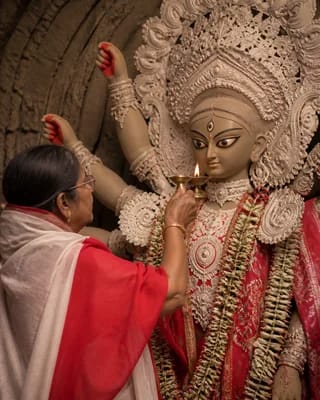
Mahalaya marks the beginning of Devi Paksha and the end of Pitri Paksha, falling on the new moon day of Ashvin month (September-October). It is the day that heralds the arrival of Durga Puja, Bengal's grandest festival.
The day is famous for the early morning broadcast of Mahalaya on All India Radio Kolkata, featuring the iconic Chandipath (recitation from Chandi) by Birendra Krishna Bhadra. Families gather around radios at 4 AM to listen to this cherished tradition.
Devotees perform Tarpan (water offerings to ancestors) at the Hooghly River and other water bodies, paying respects to departed souls. The ritual is believed to provide salvation to the ancestors.
Mahalaya also marks the day when artisans begin the final painting of Durga idols, a tradition known as Chakshu Daan (offering of the eyes). This is when the goddess's eyes are painted, bringing the clay idols to life.
Vrat Vidhi & Fasting Rules
Devotees observe a light fast and perform Tarpan rituals for ancestors.
- Wake up before sunrise and listen to the Mahalaya broadcast.
- Visit a river or water body for the Tarpan ritual.
- Offer water mixed with sesame seeds and black til to ancestors.
- Break the fast after completing the Tarpan rituals.
Parana (Breaking Fast) Note: The fast is broken after the Tarpan rituals with traditional Bengali breakfast items.
Puja Samagri & Ritual Steps
- Wake before sunrise and listen to the Mahalaya Chandipath.
- Visit the Hooghly River or a sacred water body.
- Perform Tarpan by offering water and sesame to ancestors.
- Offer pinda daan and prayers for departed souls.
- Return home and break the fast.
Frequently Asked Questions (FAQs)
Mahalaya is the day marking the beginning of Devi Paksha and the end of Pitri Paksha. It heralds the start of Durga Puja preparations and is famous for the early morning radio broadcast of Chandipath.
Chakshu Daan is the ritual of painting the eyes of Durga idols, traditionally done on Mahalaya. It symbolises the goddess coming to life and is performed by the Kumartuli artisans.
Note: All timings are represented in 24-hour notation in local time of the selected location with DST adjustment (if applicable).
Hours which are past midnight are suffixed with next day date. In Panchang, a day starts and ends with local sunrise.
Recommended Pages
Comprehensive annual Hindu calendar with tithis and festivals.
Detailed month-wise view of lunar tithis and celestial events.
Marathi Panchang and festive dates for the year.
Gujarati Vikram Samvat calendar and festivals.
Telugu calendar and festive Panchangam details.
Tamil solar calendar dates and monthly Panchangam.