
Ratha Jatra
BengaliAlso known as: Jagannath Rath Yatra, Car Festival, Ratha Jatra
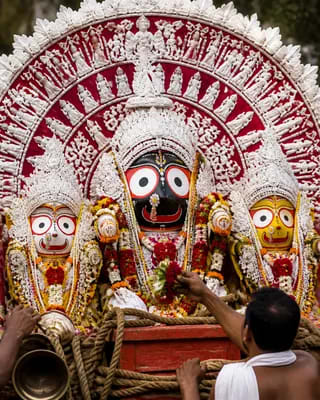
Ratha Jatra
About Ratha Jatra
Rath Yatra is the grand chariot festival of Lord Jagannath, celebrated in the month of Ashadha (June-July). While the most famous Rath Yatra takes place in Puri, Odisha, the festival is celebrated with great devotion across Bengal, especially in Kolkata and Guptipara.
Massive wooden chariots carrying the deities of Jagannath, Balabhadra, and Subhadra are pulled through the streets by thousands of devotees chanting 'Jai Jagannath.' The Kolkata Rath Yatra at ISKCON and other locations draws huge crowds every year.
The festival commemorates Lord Krishna's journey to Kurukshetra and symbolises the divine lord's visit to his devotees, making the sacred accessible to all. The tradition of pulling the chariot is considered an act of supreme devotion.
Bengal's Rath Yatra tradition includes unique customs like the offering of khichuri and vegetable curry as mahaprasad, which is distributed to devotees. The Guptipara Rath Yatra in Hooghly district is particularly renowned for its grandeur.
Vrat Vidhi & Fasting Rules
Devotees observe fasting on the day of Rath Yatra, breaking it after the deities reach their destination.
- Observe a fast during the day until the chariot reaches the destination.
- Participate in pulling the chariot as an act of devotion.
- Chant 'Jai Jagannath' and sing devotional songs.
- Receive mahaprasad after the deities are settled at the destination.
Parana (Breaking Fast) Note: The fast is broken with mahaprasad after the deities reach the destination temple.
Puja Samagri & Ritual Steps
- Visit the temple early in the morning for the mangala aarti.
- Witness the ceremonial bathing and dressing of the deities.
- Participate in pulling the chariot through the streets.
- Offer prayers and receive mahaprasad at the destination.
Frequently Asked Questions (FAQs)
While Puri in Odisha hosts the most famous Rath Yatra, in Bengal, Kolkata and Guptipara are known for their grand celebrations.
Pulling the chariot is considered an act of devotion and surrender, symbolising the devotee's desire to bring the Lord into their heart and home.
Note: All timings are represented in 24-hour notation in local time of the selected location with DST adjustment (if applicable).
Hours which are past midnight are suffixed with next day date. In Panchang, a day starts and ends with local sunrise.
Recommended Pages
Comprehensive annual Hindu calendar with tithis and festivals.
Detailed month-wise view of lunar tithis and celestial events.
Marathi Panchang and festive dates for the year.
Gujarati Vikram Samvat calendar and festivals.
Telugu calendar and festive Panchangam details.
Tamil solar calendar dates and monthly Panchangam.