
Annakut
GujaratiAlso known as: Govardhan Puja, Annakoot
Annakut
About Annakut
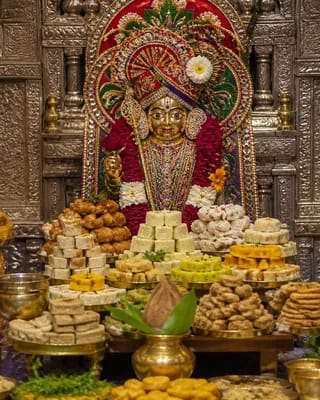
Annakut, meaning mountain of food, is celebrated the day after Diwali on Govardhan Puja. Devotees prepare and offer an elaborate variety of vegetarian dishes to Lord Krishna.
In Gujarat, temples display hundreds of dishes arranged in a grand offering, while households prepare their finest delicacies. The number of dishes can range from 56 to over 108.
The festival commemorates Lord Krishnas lifting of Govardhan Hill to protect the villagers of Vrindavan from Indras wrath, symbolising Gods protection of His devotees.
Families visit temples, offer annakut prasad, and share the blessed food with neighbours and the less fortunate, fostering community and gratitude.
Vrat Vidhi & Fasting Rules
Devotees may observe a partial fast, eating only prasad after the offering.
- Prepare a variety of vegetarian dishes.
- Visit the temple with offerings.
- Participate in the Annakut ceremony.
- Accept and share prasad with community.
Parana (Breaking Fast) Note: The fast is broken after the Annakut offering and prasad distribution.
Puja Samagri & Ritual Steps
- Prepare 56 or more varieties of vegetarian dishes.
- Arrange the dishes beautifully on a plate or altar.
- Offer the food to Lord Krishna with devotion.
- Light incense and diyas, chant Krishna mantras.
- Distribute prasad to family, friends, and the needy.
Frequently Asked Questions (FAQs)
There is no fixed number; temples may offer over a hundred different dishes while households prepare as many as possible.
It celebrates Lord Krishnas divine protection by lifting Govardhan Hill. The food offering symbolises gratitude for natures bounty.
Note: All timings are represented in 24-hour notation in local time of the selected location with DST adjustment (if applicable).
Hours which are past midnight are suffixed with next day date. In Panchang, a day starts and ends with local sunrise.
Recommended Pages
Comprehensive annual Hindu calendar with tithis and festivals.
Detailed month-wise view of lunar tithis and celestial events.
Marathi Panchang and festive dates for the year.
Gujarati Vikram Samvat calendar and festivals.
Telugu calendar and festive Panchangam details.
Tamil solar calendar dates and monthly Panchangam.