
Kalabhairav Jayanti
GujaratiAlso known as: Bhairav Ashtami, Bhairava Jayanti
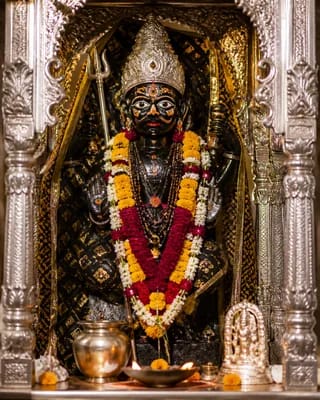
Kalabhairav Jayanti
About Kalabhairav Jayanti
Kalabhairav Jayanti celebrates the birth of Lord Kalabhairav, the fierce form of Lord Shiva who is the guardian of Varanasi. It falls on the Krishna Ashtami in Margashirsha month.
Lord Kalabhairav is known as the protector of cities and the remover of obstacles. Devotees observe a fast and perform special pujas seeking His protection and blessings.
The festival is celebrated with grand pujas in Kalabhairav temples, especially in Varanasi and other holy cities. Special offerings include liquor, meat, and other items preferred by Bhairava.
In Gujarat, Kalabhairav Jayanti is observed with devotion, with devotees seeking protection from negative energies and obstacles in life.
Vrat Vidhi & Fasting Rules
Devotees observe a fast and worship Lord Kalabhairav.
- Wake early and take a ritual bath.
- Observe a strict fast.
- Visit Kalabhairav temple for puja.
- Offer mustard oil and special items.
Parana (Breaking Fast) Note: Break the fast after completing the Kalabhairav puja.
Puja Samagri & Ritual Steps
- Clean and decorate the puja area.
- Place the Kalabhairav idol.
- Offer mustard oil, flowers, and fruits.
- Light incense sticks and perform aarti.
- Chant Kalabhairav mantras.
- Distribute prasad to devotees.
Frequently Asked Questions (FAQs)
The fierce form of Lord Shiva who is the guardian of Varanasi and the remover of obstacles.
Mustard oil, flowers, fruits, and in some traditions, liquor and meat are offered to Bhairava.
Note: All timings are represented in 24-hour notation in local time of the selected location with DST adjustment (if applicable).
Hours which are past midnight are suffixed with next day date. In Panchang, a day starts and ends with local sunrise.
Recommended Pages
Comprehensive annual Hindu calendar with tithis and festivals.
Detailed month-wise view of lunar tithis and celestial events.
Marathi Panchang and festive dates for the year.
Gujarati Vikram Samvat calendar and festivals.
Telugu calendar and festive Panchangam details.
Tamil solar calendar dates and monthly Panchangam.