
Pitrupaksha Begins
GujaratiAlso known as: Pitru Paksha, Shraddha Paksha
Pitrupaksha Begins
About Pitrupaksha Begins
Pitrupaksha Begins marks the start of the 16-day fortnight dedicated to honoring and remembering departed ancestors. It falls in the Krishna Paksha of Ashwin month, beginning after Anant Chaturdashi.
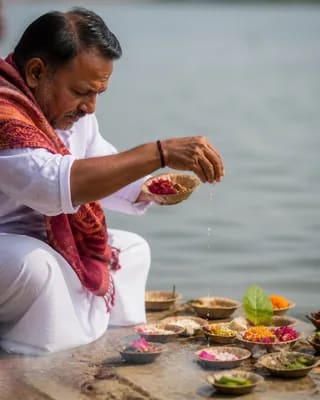
During this period, Hindus perform Shraddha, Tarpan, and other rituals for the peace and liberation of their ancestors' souls. It is considered highly auspicious for ancestral worship.
The fortnight concludes with Sarva Pitru Amavasya, the new moon day when all ancestors are worshipped together. Devotees visit holy places and perform rituals on riverbanks.
In Gujarat, Pitrupaksha is observed with traditional rituals, with families performing Shraddha ceremonies at home and at sacred rivers and lakes.
Vrat Vidhi & Fasting Rules
Devotees perform Shraddha and Tarpan rituals for their ancestors.
- Observe a fast during the Shraddha days.
- Perform Shraddha ceremonies.
- Offer food and water to ancestors.
- Visit sacred rivers and lakes.
Parana (Breaking Fast) Note: The fortnight concludes with Sarva Pitru Amavasya.
Puja Samagri & Ritual Steps
- Clean and decorate the puja area.
- Prepare rice balls and other offerings.
- Offer food and water to ancestors.
- Recite mantras for ancestral peace.
- Distribute prasad to family members.
- Repeat the rituals daily for 16 days.
Frequently Asked Questions (FAQs)
A 16-day fortnight dedicated to honoring and remembering departed ancestors through Shraddha and Tarpan rituals.
It ensures the peace and liberation of ancestors' souls and strengthens the bond between the living and the departed.
Note: All timings are represented in 24-hour notation in local time of the selected location with DST adjustment (if applicable).
Hours which are past midnight are suffixed with next day date. In Panchang, a day starts and ends with local sunrise.
Recommended Pages
Comprehensive annual Hindu calendar with tithis and festivals.
Detailed month-wise view of lunar tithis and celestial events.
Marathi Panchang and festive dates for the year.
Gujarati Vikram Samvat calendar and festivals.
Telugu calendar and festive Panchangam details.
Tamil solar calendar dates and monthly Panchangam.