
Sharad Purnima
GujaratiAlso known as: Kojaagari Purnima, Sharad Purnima
Sharad Purnima
About Sharad Purnima
Sharad Purnima is celebrated on the full moon day (Purnima) in the month of Ashwin, marking the end of the autumn season. It is also known as Kojaagari Purnima in some regions.
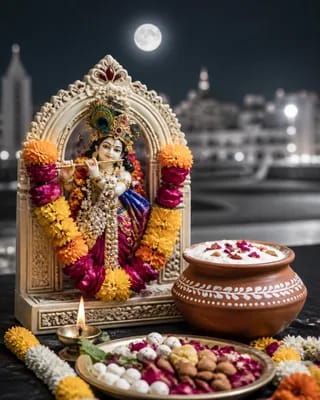
The moon on this night is believed to be at its closest to Earth, emitting healing rays that are beneficial for health. Rice kheer is traditionally prepared and left under moonlight to absorb these rays.
Devotees worship Goddess Lakshmi and Lord Vishnu on this night, staying awake throughout in celebration. The night is also associated with the story of Lord Krishna performing the Maha Raas Leela with the gopis.
In Gujarat, this purnima is celebrated with traditional dances, music, and community gatherings. It is considered one of the most auspicious full moon nights of the year.
Vrat Vidhi & Fasting Rules
Devotees observe a fast and worship Goddess Lakshmi.
- Observe a fast during the day.
- Prepare rice kheer.
- Stay awake all night.
- Worship Goddess Lakshmi and Lord Vishnu.
Parana (Breaking Fast) Note: Break the fast in the morning after sunrise.
Puja Samagri & Ritual Steps
- Clean and decorate the puja area.
- Place Lakshmi and Vishnu idols.
- Prepare rice kheer and offer to the deities.
- Light diyas and incense.
- Stay awake all night singing bhajans.
- Break the fast in the morning.
Frequently Asked Questions (FAQs)
The moon is believed to be at its closest to Earth, emitting healing rays that are absorbed by food left under its light.
Rice kheer is left under moonlight to absorb the moon's healing rays, and is then consumed as prasad.
Note: All timings are represented in 24-hour notation in local time of the selected location with DST adjustment (if applicable).
Hours which are past midnight are suffixed with next day date. In Panchang, a day starts and ends with local sunrise.
Recommended Pages
Comprehensive annual Hindu calendar with tithis and festivals.
Detailed month-wise view of lunar tithis and celestial events.
Marathi Panchang and festive dates for the year.
Gujarati Vikram Samvat calendar and festivals.
Telugu calendar and festive Panchangam details.
Tamil solar calendar dates and monthly Panchangam.