
Tulasi Vivah
GujaratiAlso known as: Tulsi Vivah, Vrinda Vivah
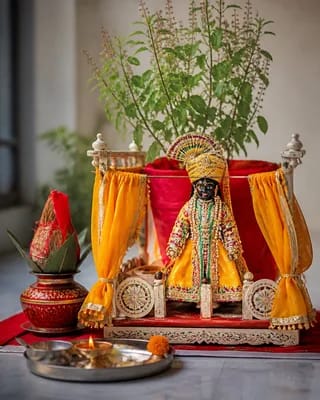
Tulasi Vivah
About Tulasi Vivah
Tulasi Vivah is a ceremonial marriage of the Tulasi (holy basil) plant to Lord Vishnu or Lord Krishna, performed on the Ekadashi day of the Shukla Paksha in Kartik month.
The Tulasi plant is considered a manifestation of Goddess Tulasi, a devotee of Lord Vishnu. The marriage ceremony symbolizes the sacred union between the devotee and the divine.
The ceremony is performed with all traditional wedding rituals, including the tying of the sacred thread (mangalsutra), application of sindoor, and offering of sweets. The Tulasi plant is decorated as a bride.
This festival marks the beginning of the auspicious Chaturmas period's end and the start of the wedding season in Hindu tradition. It is especially significant in Vaishnavite households.
Vrat Vidhi & Fasting Rules
Devotees observe a fast and perform the Tulasi marriage ceremony.
- Observe a fast on the day.
- Decorate the Tulasi plant as a bride.
- Perform the marriage ceremony.
- Offer prasad after the ceremony.
Parana (Breaking Fast) Note: Break the fast after completing the Tulasi Vivah ceremony.
Puja Samagri & Ritual Steps
- Decorate the Tulasi plant with red cloth and flowers.
- Place a Vishnu idol or image nearby.
- Perform the marriage ceremony with mantras.
- Tie the mangalsutra around the Tulasi.
- Apply sindoor to the Tulasi plant.
- Offer fruits and sweets as prasad.
Frequently Asked Questions (FAQs)
It symbolizes the sacred marriage between Goddess Tulasi and Lord Vishnu, representing the union of the devotee with the divine.
Tulasi is considered a manifestation of Goddess Lakshmi and is revered as the most sacred plant in Hinduism, symbolizing purity and devotion.
Note: All timings are represented in 24-hour notation in local time of the selected location with DST adjustment (if applicable).
Hours which are past midnight are suffixed with next day date. In Panchang, a day starts and ends with local sunrise.
Recommended Pages
Comprehensive annual Hindu calendar with tithis and festivals.
Detailed month-wise view of lunar tithis and celestial events.
Marathi Panchang and festive dates for the year.
Gujarati Vikram Samvat calendar and festivals.
Telugu calendar and festive Panchangam details.
Tamil solar calendar dates and monthly Panchangam.