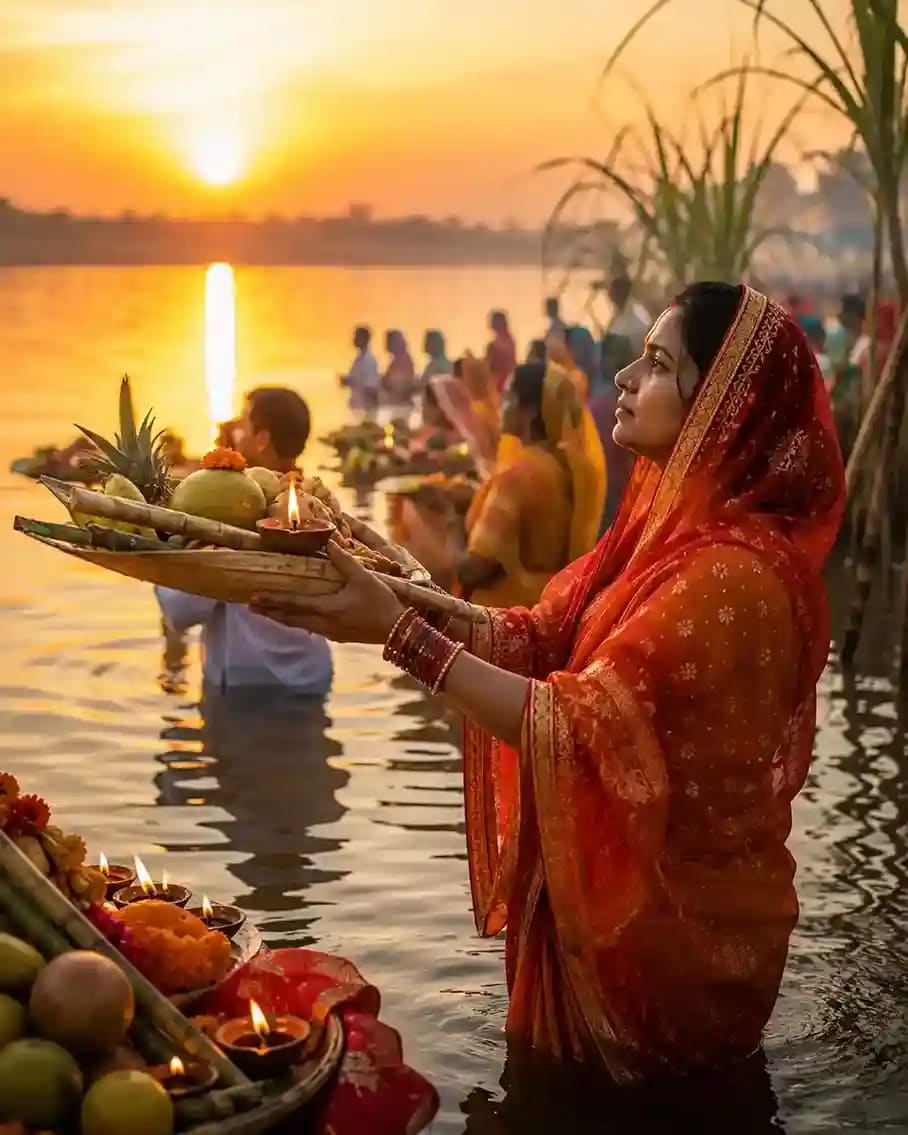
Chhath Puja is one of the most ancient and rigorous festivals of the Indian subcontinent, dedicated to Surya, the Sun God, and his sister Chhathi Maiya (also identified with Usha, the dawn). Observed primarily in Bihar, Jharkhand, eastern Uttar Pradesh, Nepal, and wherever the Maithili and Bhojpuri diaspora has settled, it is a four-day expression of gratitude for life, health, and prosperity.
The central ritual is the offering of Arghya—standing waist-deep in a river, pond, or other water body and presenting offerings to the setting sun on the third evening and the rising sun on the fourth morning. This unique solar worship honours the sun not only as a celestial body but as the source of all energy, healing, and cosmic order.
Both women and men undertake a strict fast, often without water (nirjala), during the final two days. The atmosphere resonates with folk songs, the aroma of freshly prepared thekua, and the sight of bamboo baskets decorated with fruits and sugarcane. It is believed that sincere observance can cure ailments, bless childless couples, and protect families from misfortune.
The festival also carries deep ecological wisdom: clean water bodies are essential for the rituals, encouraging communities to maintain ponds and rivers. It is a time when social divisions dissolve and collective devotion takes precedence.