
Gita Jayanti
festivalsAlso known as: Geeta Jayanti
Gita Jayanti
Gita Jayanti at a Glance
Gita Jayanti is fixed by the lunar calendar to Margashirsha Shukla Ekadashi, the 11th tithi of the waxing (Shukla) fortnight of Margashirsha.
- Tithi rule
- Margashirsha Shukla Ekadashi (Purnimanta)Shukla EkadashiMargashirsha month
- Tithi swami and group
- Vishvedeva · Nanda Tithi
About Gita Jayanti
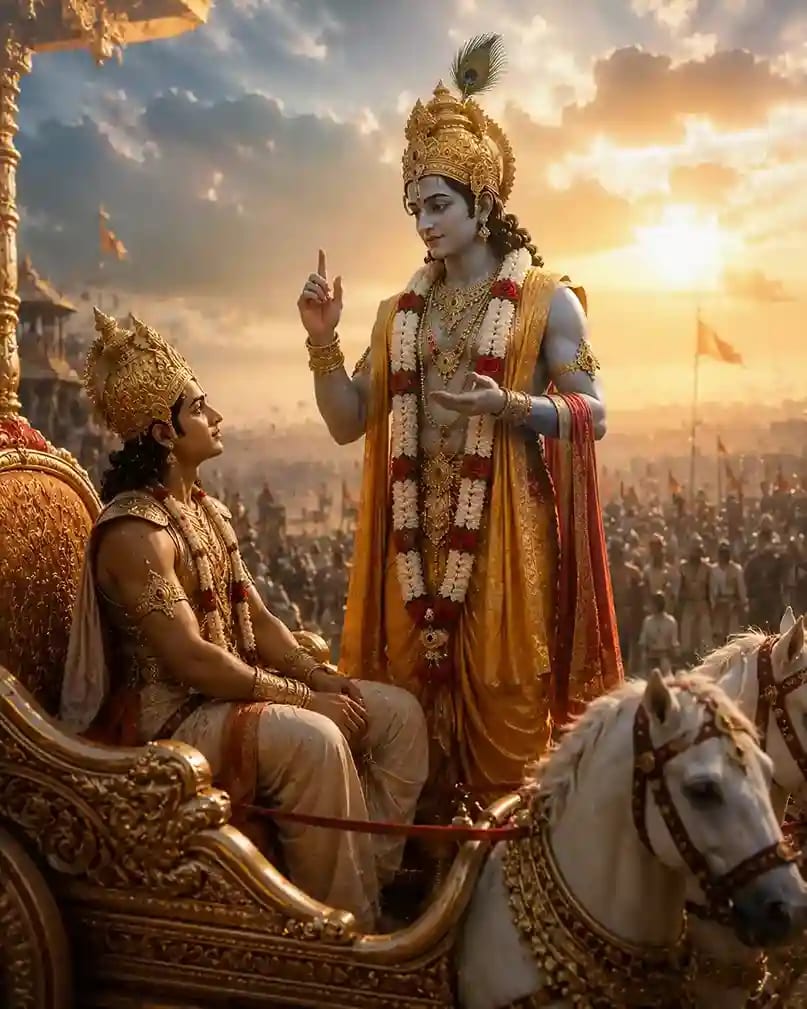
Gita Jayanti marks the day when Lord Krishna delivered the Bhagavad Gita to the despondent Arjuna on the battlefield of Kurukshetra. It falls on the Shukla Paksha Ekadashi of the Margashirsha month, the same day as Mokshada Ekadashi, and is celebrated as the birthday of the Gita—the divine song of liberation.
The Bhagavad Gita, composed of eighteen chapters and seven hundred verses, addresses the deepest questions of duty, devotion, knowledge, and the nature of the self. It teaches that righteous action, performed without attachment, becomes a path to the Divine.
On Gita Jayanti, temples, ashrams, and homes echo with the recitation of the entire Gita, often in continuous readings (akhand paths). The day is an invitation to turn inward, examine one's duties, and cultivate equanimity in the midst of life's battles.
Vrat Vidhi & Fasting Rules
Gita Jayanti is observed by fasting, reading or chanting the Bhagavad Gita, and reflecting on its teachings.
- Wake early, bathe, and place a copy of the Bhagavad Gita on a clean altar adorned with flowers.
- Observe the Ekadashi fast from grains, beans, and certain vegetables; take fruits and milk if needed.
- Recite or listen to all eighteen chapters of the Bhagavad Gita, either personally or in a group akhand path.
- Offer tulasi leaves, flowers, incense, and a ghee lamp to Lord Krishna and the Gita.
- Reflect on a chosen verse or teaching and discuss its meaning with family or fellow devotees.
- Donate copies of the Gita, food, and clothes to spread the knowledge of dharma.
Vrat Katha: Krishna's Song on the Battlefield
As the Kurukshetra war was about to begin, Prince Arjuna was overcome with grief at the thought of fighting his own kinsmen. He dropped his weapons and refused to fight.
Lord Krishna, Arjuna's charioteer and divine guide, spoke to him the timeless teachings that became the Bhagavad Gita. He explained the immortality of the soul, the importance of duty, and the paths of knowledge, devotion, and selfless action.
Arjuna's doubts were dispelled, and he picked up his bow with a clear mind and a steady heart. The Gita thus transformed a moment of despair into a revelation of eternal wisdom.
Gita Jayanti celebrates this divine discourse and reminds seekers to apply its teachings to their own inner conflicts.
Gita Jayanti: Frequently Asked Questions
Margashirsha Shukla Ekadashi; its swami is Vishvedeva, a Nanda Tithi.
Yes, it falls on Margashirsha Shukla Ekadashi, which is also observed as Mokshada Ekadashi.
Many devotees observe the Ekadashi fast, but reading and contemplating the Gita with devotion is the core observance.
Note: times are shown with their date; a Panchang day runs from sunrise to sunrise.
Recommended Pages
Comprehensive annual Hindu calendar with tithis and festivals.
Detailed month-wise view of lunar tithis and celestial events.
Marathi Panchang and festive dates for the year.
Gujarati Vikram Samvat calendar and festivals.
Telugu calendar and festive Panchangam details.
Tamil solar calendar dates and monthly Panchangam.