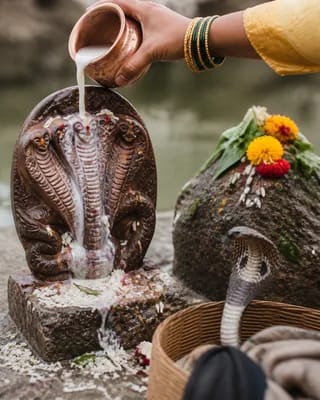
Naga Panchami is a traditional Hindu festival dedicated to the worship of serpents (Nagas) and the serpent deities that protect the earth's treasures, water sources, and fertility. Observed on the fifth day (Panchami) of the Shukla Paksha in the month of Shravana, it reflects humanity's ancient reverence for the natural world and its co-inhabitants.
In Hindu mythology, Nagas are powerful celestial beings, often depicted as half-human and half-serpent. Shesha Naga serves as the bed of Lord Vishnu, Vasuki was used as the churning rope in the Samudra Manthan, and Takshaka is a famous king of the Nagas. Worshipping them on Naga Panchami is believed to protect against snake bites, ensure rainfall, and bless families with children and prosperity.
The festival is deeply connected to agricultural life. Snakes control rodents in the fields, and their worship acknowledges their ecological role. It is also believed that offerings made to Nagas on this day appease any serpent-related curses (Naga Dosha) and protect livestock and crops.
Women play a central role in Naga Panchami rituals. They fast, draw images of snakes on the walls or doorways of homes using turmeric and cow dung, and offer milk, sweets, flowers, and prayers. In many regions, brothers visit their married sisters, reinforcing familial bonds.