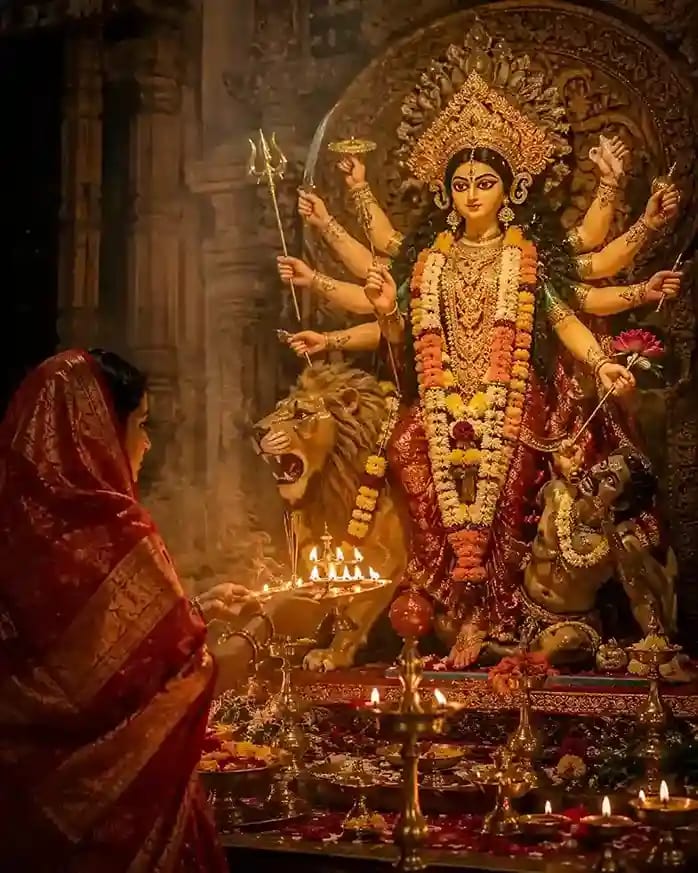
Sharad Navratri, the most widely celebrated Navratri, occurs during the bright fortnight (Shukla Paksha) of the Ashvina month, typically in September or October. This nine-night festival is dedicated to the worship of Goddess Durga in her nine manifestations and culminates on Vijayadashami or Dussehra, celebrating the goddess's victory over the buffalo demon Mahishasura. The festival also symbolizes Lord Rama's triumph over Ravana, uniting the themes of feminine divine power and righteous heroism.
Each day of Sharad Navratri honors a distinct form of the goddess: Shailaputri, Brahmacharini, Chandraghanta, Kushmanda, Skandamata, Katyayani, Kaalratri, Mahagauri, and Siddhidatri. Devotees install the Kalash (Ghatasthapana), observe fasts, chant the Durga Saptashati, and participate in vibrant cultural events such as Garba and Dandiya, especially in Gujarat, Rajasthan, and Maharashtra. In West Bengal, Assam, and Odisha, the festival transforms into Durga Puja, marked by elaborately crafted idols, grand pandals, and community celebrations.
Sharad Navratri holds profound astrological and spiritual significance. It falls at the juncture of seasons when the Sun begins its southward journey (Dakshinayana), and the goddess's energy is believed to be most accessible. The festival is a time for inner purification, spiritual discipline, and seeking the Divine Mother's blessings for protection from negative forces, success in endeavors, and the awakening of higher consciousness.