
Mahavira Nirvana
JainAlso known as: Mahavir Nirvana Divas, Mahavira's Moksha, Deep Diwas
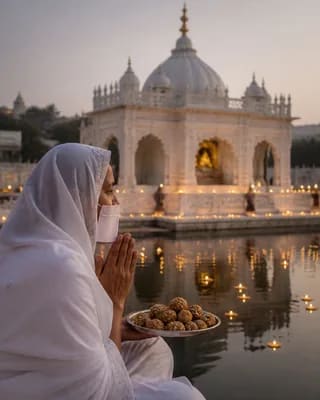
Mahavira Nirvana
About Mahavira Nirvana
Mahavira Nirvana commemorates the liberation (moksha) of Lord Mahavira, the 24th Tirthankara of Jainism, which occurred in 527 BCE at Pavapuri (near modern Rajgir, Bihar). After thirty years of teaching the Jain dharma, Lord Mahavira shed his remaining karmic matter and attained siddha (liberated soul) status, becoming free from the cycle of birth and death forever.
According to Jain tradition, Lord Mahavira's nirvana was accompanied by extraordinary cosmic events — the earth quaked, celestial flowers rained from the sky, and divine beings descended to honour his liberation. His final discourse was delivered to a gathering of monks, nuns, and lay followers, in which he emphasised the importance of the three jewels: right faith, right knowledge, and right conduct. His last words were 'Tranquillity is the nature of the soul.'
Mahavira Nirvana is observed with deep reverence and devotion. Jains visit temples, perform puja, and recite prayers in honour of Lord Mahavira's perfect life and liberation. The day is also known as 'Deep Diwas' (Festival of Lights), as Jains light lamps to symbolise the light of knowledge that Lord Mahavira brought to the world. Fasting, meditation, and charitable activities mark the observance, as devotees aspire to follow the path he illuminated towards liberation.
Vrat Vidhi & Fasting Rules
Mahavira Nirvana is observed with temple visits, puja, fasting, meditation, and the lighting of lamps symbolising the light of knowledge.
- Observe fasting or simple eating on this sacred day.
- Visit the temple and perform puja in honour of Lord Mahavira.
- Light lamps (deep) to symbolise the light of knowledge he brought to the world.
- Recite the Namokar Mantra and prayers in his honour.
- Meditate on his final teachings about the nature of the soul.
Frequently Asked Questions (FAQs)
Lord Mahavira attained moksha (liberation) at Pavapuri in 527 BCE, shedding all karmic matter and becoming a siddha (liberated soul), free from the cycle of birth and death.
Jains light lamps on this day to symbolise the light of knowledge that Lord Mahavira brought to the world. The lamps represent the dispelling of spiritual darkness.
Note: All timings are represented in 24-hour notation in local time of the selected location with DST adjustment (if applicable).
Hours which are past midnight are suffixed with next day date. In Panchang, a day starts and ends with local sunrise.
Recommended Pages
Comprehensive annual Hindu calendar with tithis and festivals.
Detailed month-wise view of lunar tithis and celestial events.
Marathi Panchang and festive dates for the year.
Gujarati Vikram Samvat calendar and festivals.
Telugu calendar and festive Panchangam details.
Tamil solar calendar dates and monthly Panchangam.