
Rohini Vrat
JainAlso known as: Rohini Vrat, Rohini Nakshatra Vrat
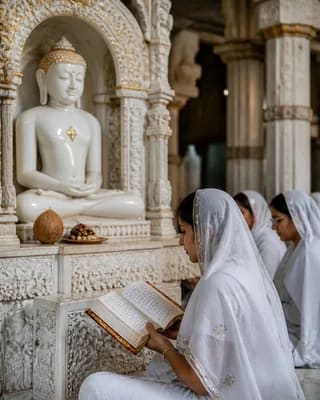
Rohini Vrat
About Rohini Vrat
Rohini Vrat is a significant observance in the Jain calendar, observed on the Rohini nakshatra (star) in the month of Bhadrapada (August–September). This vrat is observed in honour of Rohini, a celestial being who plays an important role in Jain cosmology and the life stories of the Tirthankaras. The observance is particularly important in the Shvetambara Jain tradition.
According to Jain tradition, Rohini is associated with the concept of divine protection and guidance. The vrat involves fasting, prayer, and meditation on the qualities of celestial beings who serve the Tirthankaras. Devotees observe this vrat to seek spiritual protection, purify their minds, and cultivate devotion. The Rohini nakshatra itself is considered auspicious in Jain astrology, and observing a vrat on this day is believed to generate significant spiritual merit.
On Rohini Vrat, Jains observe fasting, visit temples, recite prayers and mantras, and reflect on the celestial beings who serve the Tirthankaras. The day is also an occasion for charity and community service. The observance strengthens the devotee's connection to the celestial realm and reinforces the Jain commitment to spiritual practice and moral conduct.
Vrat Vidhi & Fasting Rules
Rohini Vrat is observed with fasting, prayer, meditation, and reflection on celestial beings who serve the Tirthankaras.
- Observe fasting on the day of Rohini nakshatra.
- Visit the temple and offer prayers to the Tirthankaras and celestial beings.
- Recite the Namokar Mantra and other sacred prayers.
- Meditate on the qualities of divine protection and guidance.
- Perform acts of charity and community service.
Frequently Asked Questions (FAQs)
Rohini is one of the 27 nakshatras (lunar mansions) in Indian astronomy. In Jainism, it is considered an auspicious star for spiritual observances and vratas.
Rohini is a celestial being associated with divine protection and guidance in Jain cosmology. The vrat is observed in honour of this celestial entity.
Note: All timings are represented in 24-hour notation in local time of the selected location with DST adjustment (if applicable).
Hours which are past midnight are suffixed with next day date. In Panchang, a day starts and ends with local sunrise.
Recommended Pages
Comprehensive annual Hindu calendar with tithis and festivals.
Detailed month-wise view of lunar tithis and celestial events.
Marathi Panchang and festive dates for the year.
Gujarati Vikram Samvat calendar and festivals.
Telugu calendar and festive Panchangam details.
Tamil solar calendar dates and monthly Panchangam.