
Samvatsari
JainAlso known as: Samvatsari Pratikramana, Kshamavani
Samvatsari
About Samvatsari
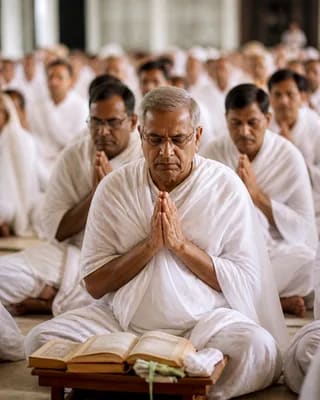
Samvatsari is the last and most important day of Paryushana, observed as the supreme Day of Forgiveness in Jainism. On this day, Jains perform the Samvatsari Pratikramana — a comprehensive ritual of confession, repentance, and seeking forgiveness for all sins committed during the past year, knowingly or unknowingly, through thought, word, or deed.
The defining moment of Samvatsari is when Jains approach friends, family, colleagues, and even strangers and say 'Micchami Dukkadam' — a phrase meaning 'May all the evil that has been done be fruitless' or 'If I have hurt you in any way, knowingly or unknowingly, I seek your forgiveness.' This practice of seeking and granting forgiveness is believed to dissolve karmic bonds and purify the soul. The act requires genuine humility and courage from the seeker, and magnanimity and compassion from the one who grants forgiveness.
Samvatsari is a deeply emotional and transformative day. The Jain community comes together in temples and homes to perform the Pratikramana ritual, which includes the confession of sins, the vow to avoid repeating them, and the seeking of forgiveness from all beings. The atmosphere is one of spiritual renewal, communal harmony, and profound inner peace. Many Jains consider Samvatsari the most sacred day of the year — a day when the soul is cleansed and purified through the power of forgiveness.
Vrat Vidhi & Fasting Rules
Samvatsari is observed with the Pratikramana ritual, seeking forgiveness from all beings, and saying 'Micchami Dukkadam' to everyone.
- Perform the Samvatsari Pratikramana — the comprehensive annual ritual of confession and repentance.
- Approach all those you may have hurt during the year and seek their forgiveness with 'Micchami Dukkadam.'
- Forgive all those who may have hurt you, without reservation.
- Observe a strict fast and spend the day in deep meditation and self-reflection.
- Resolve to avoid repeating past mistakes and to cultivate the ten virtues in the coming year.
Frequently Asked Questions (FAQs)
It means 'May all the evil that has been done be fruitless' or 'If I have hurt you in any way, I seek your forgiveness.' It is the defining phrase of Samvatsari.
Jain philosophy teaches that anger, hatred, and ill-will generate negative karma. Forgiveness dissolves these bonds and purifies the soul, making it essential for spiritual liberation.
Note: All timings are represented in 24-hour notation in local time of the selected location with DST adjustment (if applicable).
Hours which are past midnight are suffixed with next day date. In Panchang, a day starts and ends with local sunrise.
Recommended Pages
Comprehensive annual Hindu calendar with tithis and festivals.
Detailed month-wise view of lunar tithis and celestial events.
Marathi Panchang and festive dates for the year.
Gujarati Vikram Samvat calendar and festivals.
Telugu calendar and festive Panchangam details.
Tamil solar calendar dates and monthly Panchangam.