
Amalaki Ekadashi
Nepali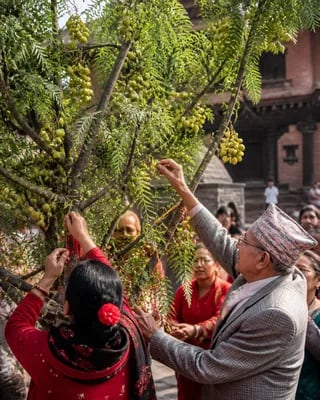
Amalaki Ekadashi
About Amalaki Ekadashi
Amalaki Ekadashi falls on the 11th day of the bright fortnight in Falgun (February-March). It is dedicated to the worship of the Amla (Indian gooseberry) tree, considered a manifestation of Lord Vishnu.
The day is also celebrated as the birthday of Lord Vishnu in some traditions. Devotees visit temples and offer prayers with Amla fruits.
Observing this fast is believed to bestow immense spiritual merit and cleanse all sins.
Vrat Vidhi & Fasting Rules
A strict fast without food or water is ideally observed.
- Take a ritual bath before dawn.
- Chant Vishnu Sahasranama and offer prayers.
- Maintain celibacy and avoid negative thoughts.
- Spend the day in prayer and meditation.
Parana (Breaking Fast) Note: The fast is broken on Dwadashi after offering food to Brahmins.
Puja Samagri & Ritual Steps
- Set up the Vishnu altar with flowers and Tulsi leaves.
- Offer Amla fruits and panchamrit to Lord Vishnu.
- Chant Vishnu Sahasranama and perform aarti.
- Distribute prasad to devotees.
Frequently Asked Questions (FAQs)
Observing Amalaki Ekadashi is believed to destroy sins, grant spiritual purification, and lead to liberation.
Note: All timings are represented in 24-hour notation in local time of the selected location with DST adjustment (if applicable).
Hours which are past midnight are suffixed with next day date. In Panchang, a day starts and ends with local sunrise.
Recommended Pages
Comprehensive annual Hindu calendar with tithis and festivals.
Detailed month-wise view of lunar tithis and celestial events.
Marathi Panchang and festive dates for the year.
Gujarati Vikram Samvat calendar and festivals.
Telugu calendar and festive Panchangam details.
Tamil solar calendar dates and monthly Panchangam.