
Dipavali
OdiaAlso known as: Deepavali, Diwali
Dipavali
About Dipavali
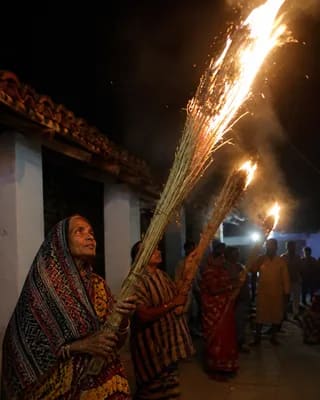
Dipavali, the festival of lights, is celebrated in Odisha on the new moon day of Kartik month (October-November). It marks the triumph of light over darkness and is one of the grandest celebrations in the state.
In Odisha, Dipavali is associated with the worship of Goddess Lakshmi and Lord Ganesha. Homes are cleaned and decorated with earthen lamps, rangoli, and lights to welcome the goddess of wealth.
The five-day celebration includes Dhanteras, Chhoti Dipavali (Narak Chaturdashi), Dipavali proper, Govardhan Puja, and Bhai Dooj. Each day has its own significance and rituals.
Fireworks illuminate the night sky, and families gather for festive meals, exchange of sweets and gifts, and prayers for prosperity. The Jagannath Temple in Puri holds special celebrations.
Vrat Vidhi & Fasting Rules
Devotees observe fasting during the Dipavali period, especially on Narak Chaturdashi.
- Clean and decorate the house with earthen lamps and rangoli.
- Observe fasting on Narak Chaturdashi.
- Perform Lakshmi-Ganesha puja in the evening.
- Exchange sweets and gifts with family and neighbours.
Parana (Breaking Fast) Note: The fast is broken after the evening Lakshmi-Ganesha puja with prasad.
Puja Samagri & Ritual Steps
- Clean the house and draw rangoli at the entrance.
- Light earthen lamps throughout the house.
- Perform Lakshmi-Ganesha puja in the evening.
- Exchange sweets and fireworks with neighbours.
- Enjoy the festive meal with family.
Frequently Asked Questions (FAQs)
Dipavali involves cleaning and lighting homes, worshipping Lakshmi and Ganesha, preparing traditional sweets, exchanging gifts, and celebrating with fireworks over five days.
Note: All timings are represented in 24-hour notation in local time of the selected location with DST adjustment (if applicable).
Hours which are past midnight are suffixed with next day date. In Panchang, a day starts and ends with local sunrise.
Recommended Pages
Comprehensive annual Hindu calendar with tithis and festivals.
Detailed month-wise view of lunar tithis and celestial events.
Marathi Panchang and festive dates for the year.
Gujarati Vikram Samvat calendar and festivals.
Telugu calendar and festive Panchangam details.
Tamil solar calendar dates and monthly Panchangam.