
Holika Dahan
OdiaAlso known as: Chhoti Holi
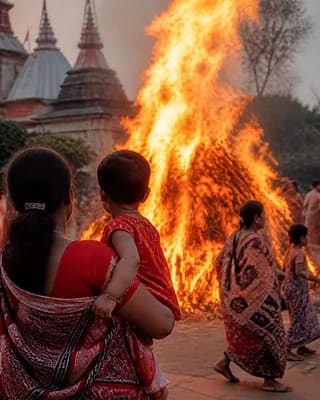
Holika Dahan
About Holika Dahan
Holika Dahan is celebrated on the full moon day of Falgun month (March), the eve of Holi. It commemorates the burning of demoness Holika and the divine protection of devotee Prahlad by Lord Vishnu.
In Odisha, communities gather in the evening to light large bonfires. The fires symbolise the destruction of evil and the triumph of devotion and righteousness. People sing and dance around the fire.
The ritual involves circling the bonfire three or seven times, offering coconut, grains, and other items into the fire as a sacrifice. The fire is believed to purify the atmosphere.
Holika Dahan is an important community event where neighbours come together, share sweets, and celebrate the victory of good over evil before the colourful revelry of Holi.
Vrat Vidhi & Fasting Rules
Devotees observe a light fast and gather for the Holika Dahan bonfire ceremony.
- Observe a light fast during the day.
- Build the community bonfire.
- Light the fire at the auspicious time.
- Offer coconut and prayers into the fire.
- Share prasad with community members.
Parana (Breaking Fast) Note: The fast is broken after the bonfire ceremony with prasad.
Puja Samagri & Ritual Steps
- Build the Holika Dahan bonfire.
- Light the fire at the auspicious time.
- Circle the fire while offering coconut and grains.
- Offer prayers for the destruction of evil.
- Distribute prasad among community members.
Frequently Asked Questions (FAQs)
Holika Dahan commemorates the burning of demoness Holika who tried to kill devotee Prahlad. Lord Vishnu protected Prahlad while Holika was consumed by flames.
Note: All timings are represented in 24-hour notation in local time of the selected location with DST adjustment (if applicable).
Hours which are past midnight are suffixed with next day date. In Panchang, a day starts and ends with local sunrise.
Recommended Pages
Comprehensive annual Hindu calendar with tithis and festivals.
Detailed month-wise view of lunar tithis and celestial events.
Marathi Panchang and festive dates for the year.
Gujarati Vikram Samvat calendar and festivals.
Telugu calendar and festive Panchangam details.
Tamil solar calendar dates and monthly Panchangam.