
Holi
TeluguAlso known as: Dolotsavam, Rangapanchami
Holi
About Holi
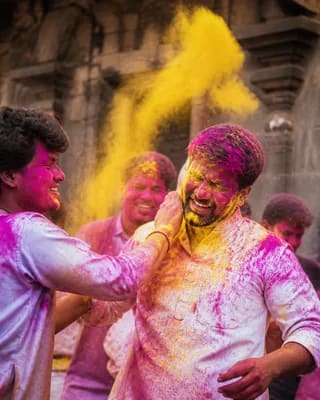
Holi, the festival of colours, is celebrated across Andhra Pradesh with great enthusiasm. It marks the arrival of spring and the victory of good over evil, commemorating the story of Prahlad and Holika.
On the main day, people throw coloured powders (gulal) and water at each other, dance to festive music, and enjoy traditional sweets like gujiya and thandai.
The celebrations begin the previous evening with the lighting of the Holika bonfire, symbolising the burning of evil. In Andhra Pradesh, the festival is also associated with the divine love of Radha and Krishna.
Vrat Vidhi & Fasting Rules
Holi is primarily a celebration rather than a fasting festival. People enjoy festive foods and participate in colour play.
- Light the Holika bonfire the previous evening.
- Apply gulal (coloured powder) to elders as a mark of respect.
- Distribute sweets and festive foods to neighbours and friends.
- Participate in the colourful celebrations with family and community.
Frequently Asked Questions (FAQs)
The bonfire symbolises the burning of demoness Holika and the triumph of good over evil. It represents the purification of the soul and the destruction of negativity.
In Andhra Pradesh, Holi is celebrated with gulal, music, and dance. The Dolotsavam tradition involves swinging the deity on a decorated swing.
Note: All timings are represented in 24-hour notation in local time of the selected location with DST adjustment (if applicable).
Hours which are past midnight are suffixed with next day date. In Panchang, a day starts and ends with local sunrise.
Recommended Pages
Comprehensive annual Hindu calendar with tithis and festivals.
Detailed month-wise view of lunar tithis and celestial events.
Marathi Panchang and festive dates for the year.
Gujarati Vikram Samvat calendar and festivals.
Telugu calendar and festive Panchangam details.
Tamil solar calendar dates and monthly Panchangam.