
Shani Pradosh Vrat
TeluguAlso known as: Shani Pradosh, Saturday Pradosh
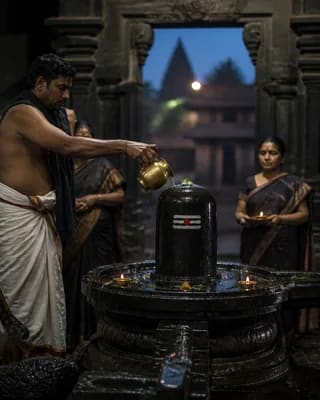
Shani Pradosh Vrat
About Shani Pradosh Vrat
Shani Pradosh is observed when Pradosh Vrat falls on a Saturday (Shani's day). It is dedicated to both Lord Shiva and Lord Shani (Saturn).
Devotees observe fasting and perform evening prayers at Shiva temples. The worship of Shani on this day is believed to mitigate the adverse effects of Saturn in one's horoscope.
The combination of Pradosh and Shani worship makes this a powerful vrat for overcoming obstacles, debts, and health issues related to Saturn's influence.
Vrat Vidhi & Fasting Rules
Devotees fast and perform combined Shiva-Saturn worship during the Pradosh time.
Om Namah Shivaya, Om Shanaicharaya Namah, I seek the blessings of Lord Shiva and Lord Shani for protection and the removal of obstacles.
- Wake up early and take a ritual bath.
- Observe fasting throughout the day.
- Visit Shiva temples during Pradosh time (evening twilight).
- Offer prayers to both Lord Shiva and Lord Shani.
Puja Samagri & Ritual Steps
- Clean the Shiva temple puja area.
- Offer water, milk, and bilva leaves to the Shiva lingam.
- Light a mustard oil lamp for Lord Shani.
- Chant Shiva and Shani mantras during Pradosh time.
Frequently Asked Questions (FAQs)
When Pradosh falls on Saturday, worshipping both Shiva and Shani brings combined blessings. It is especially beneficial for those facing Saturn-related difficulties.
Lord Shani is worshipped with black sesame seeds, mustard oil, and blue/black flowers. Reciting Shani mantras and donating to the needy are also recommended.
Note: All timings are represented in 24-hour notation in local time of the selected location with DST adjustment (if applicable).
Hours which are past midnight are suffixed with next day date. In Panchang, a day starts and ends with local sunrise.
Recommended Pages
Comprehensive annual Hindu calendar with tithis and festivals.
Detailed month-wise view of lunar tithis and celestial events.
Marathi Panchang and festive dates for the year.
Gujarati Vikram Samvat calendar and festivals.
Telugu calendar and festive Panchangam details.
Tamil solar calendar dates and monthly Panchangam.