
Vijaya Ekadashi
TeluguAlso known as: Vijaya Ekadashi, Phalguna Krishna Ekadashi
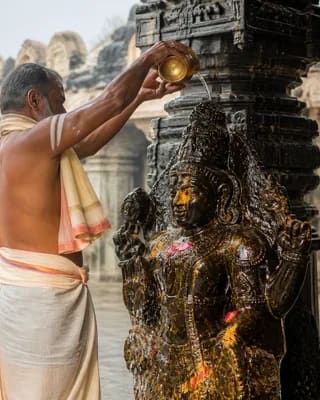
Vijaya Ekadashi
About Vijaya Ekadashi
Vijaya Ekadashi falls on the eleventh day of the dark fortnight in Phalguna (February-March). The name means 'victory' — the vrat is believed to grant victory over enemies and obstacles.
Devotees observe strict fasting and worship Lord Vishnu, seeking success in their endeavours and spiritual victory.
In Andhra Pradesh, temples hold special pukas and devotees gather for communal prayers. The festival marks the end of the Hindu lunar year.
Vrat Vidhi & Fasting Rules
Devotees observe strict fasting and worship Lord Vishnu for victory in all endeavours.
Om Namo Narayanaya, I observe this Vijaya Ekadashi vrat for victory over all obstacles and spiritual liberation.
- Wake up early and take a ritual bath.
- Observe strict fasting throughout the day.
- Worship Lord Vishnu with flowers, fruits, and mantras.
- Break the fast the next day after morning prayers.
Frequently Asked Questions (FAQs)
Vijaya means 'victory'. Observing this Ekadashi is believed to grant victory over enemies, obstacles, and the forces that hinder spiritual progress.
Note: All timings are represented in 24-hour notation in local time of the selected location with DST adjustment (if applicable).
Hours which are past midnight are suffixed with next day date. In Panchang, a day starts and ends with local sunrise.
Recommended Pages
Comprehensive annual Hindu calendar with tithis and festivals.
Detailed month-wise view of lunar tithis and celestial events.
Marathi Panchang and festive dates for the year.
Gujarati Vikram Samvat calendar and festivals.
Telugu calendar and festive Panchangam details.
Tamil solar calendar dates and monthly Panchangam.