
Ashokashtami
festivalsQuick Overview
- Date in 2026
- Wednesday, March 25, 2026
- Tithi
- Chaitra Shukla Ashtami (Purnimanta)
- Tithi begins / ends
- 01:51 PM, Mar 25 to 11:49 AM, Mar 26
- Lunar month
- Chaitra · Shukla Paksha
- Also on this tithi
- Bhavani Jayanti
Ashokashtami
Wednesday, March 25, 2026
Lunar Month: Chaitra
Ashokashtami at a Glance
Ashokashtami is fixed by the lunar calendar to Chaitra Shukla Ashtami, the 8th tithi of the waxing (Shukla) fortnight of Chaitra.
- Tithi rule
- Chaitra Shukla Ashtami (Purnimanta)Shukla AshtamiChaitra month
- Tithi swami and group
- Shiva · Jaya Tithi
- Also on this tithi
- Bhavani Jayanti
Panchanga on This Day
Ashokashtami · Mar 25, 2026
About Ashokashtami
Ashokashtami is celebrated on the Shukla Paksha Ashtami of the Chaitra month and holds profound significance across several regions of India, particularly in Kashmir, Bengal, Odisha, and parts of North India. The festival derives its name from the Ashoka tree (Saraca asoca), whose fresh, bright-orange blossoms symbolize renewal, hope, and the arrival of spring. This day is closely associated with Lord Rama and is believed to mark his departure from Ayodhya to begin his victorious campaign against the demon king Ravana.
In the Kashmir Valley, Ashokashtami is one of the most important Hindu festivals. Devotees throng the Shankaracharya Temple and other shrines, offering Ashoka leaves and flowers to Lord Shiva and Lord Rama. The festival signals the triumph of dharma and is considered highly auspicious for beginning new ventures, journeys, and spiritual undertakings. Chariot processions (Ratha Yatras) carrying the utsava murtis of deities are a vibrant feature of the celebrations.
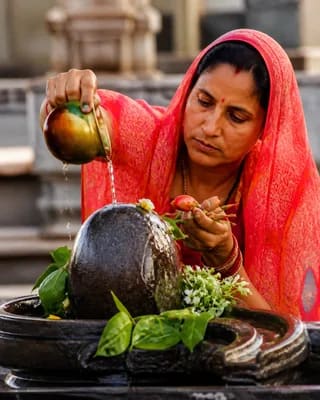
In Odisha, Ashokashtami coincides with the grand Ratha Yatra preparations and is linked to Lord Lingaraja and other regional deities. Devotees offer Ashoka flowers and leaves, perform Abhishekam, and participate in community feasts. The Ashoka tree, with its sorrow-relieving name ('Shoka' meaning sorrow and 'A' meaning without), is venerated as a remover of grief and a harbinger of joy.
Vrat Vidhi & Fasting Rules
Devotees worship Lord Rama and Lord Shiva with Ashoka leaves and flowers, seeking victory, relief from sorrow, and spiritual renewal.
- Rise early, bathe, and wear clean clothes, preferably in shades of orange, red, or white.
- Observe a partial fast, abstaining from grains and heavy foods; consume fruits, milk, and satvik preparations.
- Collect fresh Ashoka leaves and flowers, being careful not to harm the tree unnecessarily.
- Perform Puja to Lord Rama or Lord Shiva, offering Ashoka leaves, flowers, sandalwood paste, incense, and lamps.
- Recite the Ramayana, especially the Ayodhya Kanda, or chant the Rama Taraka Mantra.
- If possible, participate in or organize a small Ratha Yatra or chariot procession of the family deity.
Puja Samagri & Ritual Steps
- Install an image or idol of Lord Rama (or Shiva) on a clean altar decorated with Ashoka flowers.
- Perform Achamana and Sankalpa, resolving to observe Ashokashtami with devotion.
- Offer Ashoka leaves and flowers to the deity while chanting Rama or Shiva mantras.
- Apply sandalwood paste and Kumkum to the deity, light incense, and wave a ghee lamp.
- Offer Naivedya of fruits and sweets, followed by Aarti and Prasad distribution.
Vrat Katha: Rama's Departure and the Blessing of the Ashoka Tree
According to tradition, on the Shukla Paksha Ashtami of Chaitra, Lord Rama prepared to leave Ayodhya to rescue Goddess Sita from the demon king Ravana.
The citizens of Ayodhya, filled with anxiety and love, offered prayers to Lord Shiva and worshipped the Ashoka tree, whose blossoms symbolized freedom from sorrow.
It is said that wherever Rama's chariot passed, Ashoka trees bloomed miraculously, assuring the people that righteousness would soon triumph over evil.
Since then, devotees worship the Ashoka tree on this day, believing that sincere prayers will remove grief, grant victory in noble endeavors, and usher in prosperity.
Ashokashtami: Frequently Asked Questions
Chaitra Shukla Ashtami; its swami is Shiva, a Jaya Tithi.
Shukla Ashtami: 01:51 PM, Wed, Mar 25, 2026 to 11:49 AM, Thu, Mar 26, 2026 (IST).
Chaitra Shukla Ashtami: 05:29 PM, Tue, Apr 13, 2027 to 03:24 PM, Wed, Apr 14, 2027 (IST).
Bhavani Jayanti, also on Chaitra Shukla Ashtami.
Lord Rama is the primary deity in North and Eastern India, while in Kashmir, Lord Shiva and local forms of the Divine Mother are also worshipped with Ashoka leaves.
The name Ashoka means 'without sorrow'. Its blooming flowers represent the end of grief, renewal, and the victory of righteousness.
Yes, Ashokashtami falls during Chaitra Navratri and its celebration often overlaps with the broader nine-night worship of Goddess Durga.
Festivals in the Same Lunar Month
Chaitra
Note: times are shown with their date; a Panchang day runs from sunrise to sunrise.
Recommended Pages
Comprehensive annual Hindu calendar with tithis and festivals.
Detailed month-wise view of lunar tithis and celestial events.
Marathi Panchang and festive dates for the year.
Gujarati Vikram Samvat calendar and festivals.
Telugu calendar and festive Panchangam details.
Tamil solar calendar dates and monthly Panchangam.