
Ashunyashayana Vrata
festivals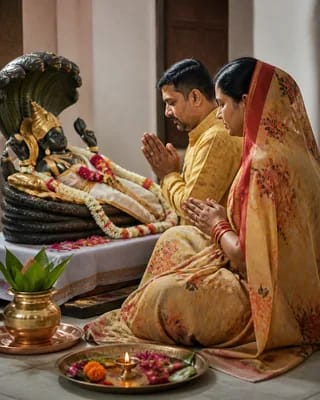
Ashunyashayana Vrata
Ashunyashayana Vrata at a Glance
Ashunyashayana Vrata is fixed by the lunar calendar to Shravana Krishna Dwitiya, the 2nd tithi of the waning (Krishna) fortnight of Shravana (Ashadha Krishna Dwitiya in the Amanta calendar).
- Tithi rule
- Shravana Krishna Dwitiya (Purnimanta)Krishna DwitiyaShravana month
- Tithi swami and group
- Brahma · Bhadra Tithi
About Ashunyashayana Vrata
Ashunyashayana Vrata, also known as Ashunya Shayani Vrata, is a sacred observance dedicated to Lord Vishnu during the Chaturmas period, the four holy months when the Lord is believed to be in His cosmic sleep (Yoga Nidra) upon the serpent Shesha. The term 'Ashunyashayana' implies 'sleeping on the ground' or 'not sleeping on a bed', signifying the devotee's resolve to sleep on the floor as an act of austerity and devotion while the Lord rests. It is a profound expression of spiritual discipline and surrender.
This Vrata typically begins around Devashayani Ekadashi, when Lord Vishnu is ceremonially put to sleep, and continues until Deva-Prabodhini Ekadashi, when He awakens. During this period, devotees minimize comforts, simplify their lifestyle, and intensify their spiritual practices. Sleeping on the ground is considered a symbolic way to remain humble, detached from bodily comforts, and aligned with the cosmic rhythm of the Divine.
The observance is particularly significant for Vaishnavas and those seeking Vishnu's grace. Along with sleeping on the floor, devotees abstain from certain foods, avoid auspicious ceremonies like weddings, and engage in increased scriptural study, chanting, and charity. Ashunyashayana Vrata teaches detachment (Vairagya), self-discipline, and the cultivation of inner contentment.
Vrat Vidhi & Fasting Rules
The Vrata involves sleeping on the ground, observing dietary restrictions, and intensifying Vishnu worship throughout the Chaturmas period.
- Begin the Vrata on Devashayani Ekadashi by taking a Sankalpa before Lord Vishnu to sleep on the ground throughout Chaturmas.
- Sleep on a simple mat or cloth on the floor, avoiding beds, cots, or elevated sleeping arrangements.
- Observe a satvik diet; many devotees avoid onion, garlic, and heavy spices, while strict observers may also abstain from certain vegetables.
- Perform daily Vishnu Puja, chant the Vishnu Sahasranama, and read scriptures such as the Bhagavad Gita or Srimad Bhagavatam.
- Refrain from initiating weddings, housewarmings, or other auspicious ceremonies during the Chaturmas period.
- Conclude the Vrata on Deva-Prabodhini Ekadashi with special Puja, charity, and breaking of the floor-sleeping vow.
Puja Samagri & Ritual Steps
- Set up an altar with an image of Lord Vishnu reclining on Shesha Naga.
- Perform a ceremonial offering of Panchamrit, Tulsi leaves, and yellow flowers.
- Chant Vishnu Sahasranama or the Shayan mantra to invoke the Lord's resting form.
- Light a lamp and incense, perform Aarti, and resolve to maintain simplicity during the Vrata period.
Ashunyashayana Vrata: Frequently Asked Questions
Shravana Krishna Dwitiya (Ashadha Krishna Dwitiya in the Amanta calendar); its swami is Brahma, a Bhadra Tithi.
It generally begins on Devashayani Ekadashi and concludes on Deva-Prabodhini Ekadashi, covering the four-month Chaturmas period.
Yes, the Vrata should be adapted to one's health. The essence is simplicity and humility; elderly or unwell devotees may use a thin mattress or sleep on a low mat.
No, both men and women can observe Ashunyashayana Vrata. Pregnant women and those with health concerns should modify the observance accordingly.
Note: times are shown with their date; a Panchang day runs from sunrise to sunrise.
Recommended Pages
Comprehensive annual Hindu calendar with tithis and festivals.
Detailed month-wise view of lunar tithis and celestial events.
Marathi Panchang and festive dates for the year.
Gujarati Vikram Samvat calendar and festivals.
Telugu calendar and festive Panchangam details.
Tamil solar calendar dates and monthly Panchangam.