
Balarama Jayanti
festivalsQuick Overview
- Date in 2026
- Wednesday, September 16, 2026
- Tithi
- Bhadrapada Shukla Shashthi (Purnimanta)
- Tithi begins / ends
- 09:00 AM, Sep 16 to 10:49 AM, Sep 17
- Lunar month
- Bhadrapada · Shukla Paksha
Balarama Jayanti
Wednesday, September 16, 2026
Lunar Month: Bhadrapada
Balarama Jayanti at a Glance
Balarama Jayanti is fixed by the lunar calendar to Bhadrapada Shukla Shashthi, the 6th tithi of the waxing (Shukla) fortnight of Bhadrapada.
- Tithi rule
- Bhadrapada Shukla Shashthi (Purnimanta)Shukla ShashthiBhadrapada month
- Tithi swami and group
- Kartikeya · Nanda Tithi
Panchanga on This Day
Balarama Jayanti · Sep 16, 2026
About Balarama Jayanti
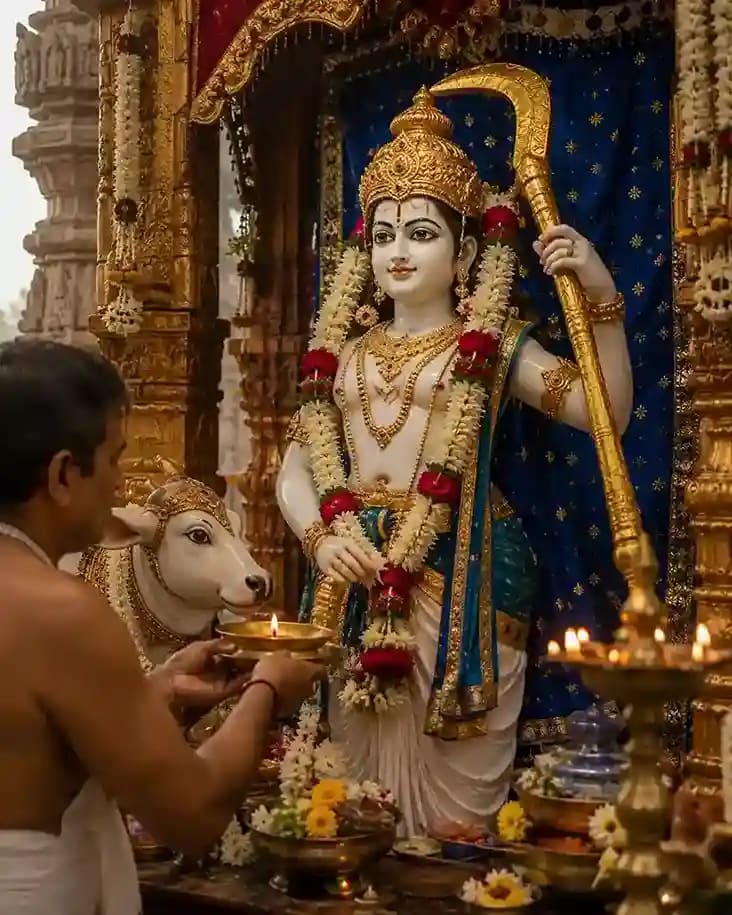
Balarama Jayanti celebrates the divine appearance of Lord Balarama, the elder brother of Lord Krishna and the powerful incarnation of Shesha Naga, the cosmic serpent upon whom Lord Vishnu reclines. Born to Vasudeva and Devaki and raised by Nanda and Yashoda in Gokul, Balarama is revered as the source of spiritual strength, agricultural prosperity, and divine protection. He is depicted holding a plough (Hala) and a mace (Musalam), symbolizing his role as the deity of farming, fertility, and dharma.
The festival is traditionally observed on the full moon day (Purnima) of the Shravana month, which often coincides with Raksha Bandhan and the beginning of the harvest season in many parts of India. In Kerala, this day is celebrated as Balarama Jayanti with particular grandeur at temples such as the Thriprangode Siva Temple and other Vaishnava shrines. In Punjab and Haryana, the festival overlaps with the agricultural spirit of the monsoon harvest.
Balarama is also known as Baladeva, Balabhadra, and Haladhara. In the Jagannath tradition of Odisha, Balabhadra is worshipped alongside Jagannath (Krishna) and Subhadra as one of the three principal deities. His Jayanti is a time for farmers to honor their tools, express gratitude for rains and crops, and seek strength for the labor ahead. Devotees prepare special dishes, decorate temples, and recount stories of Balarama's heroic deeds.
Vrat Vidhi & Fasting Rules
Devotees fast, perform Puja to Lord Balarama, and honor farming and pastoral life on this auspicious Purnima.
- Wake before sunrise, bathe, and wear clean, preferably yellow or white, clothes.
- Observe a partial or full fast, breaking it only after evening Puja and distribution of Prasad.
- Install an image or idol of Lord Balarama holding his plough and mace, often alongside Krishna.
- Offer fresh butter, milk, sweets, seasonal fruits, and Tulsi leaves to the deity.
- Recite prayers from the Srimad Bhagavatam describing Balarama's birth and exploits.
- Farmers may ceremonially clean and worship their ploughs and farming tools as a mark of respect.
Puja Samagri & Ritual Steps
- Clean the Puja area and place the deity image of Balarama and Krishna.
- Perform Achamana, Sankalpa, and Abhishekam with Panchamrit or scented water.
- Offer fresh butter, milk, sweets, Tulsi leaves, and yellow flowers.
- Light incense and a ghee lamp, recite Balarama stotras, and perform Aarti.
- Distribute Prasad of butter-based sweets and fruits to family and guests.
Vrat Katha: The Appearance of Lord Balarama
When the tyrannical King Kamsa imprisoned his sister Devaki and her husband Vasudeva, a divine prophecy foretold that Devaki's eighth child would destroy Kamsa.
To protect the cosmic order, the Supreme Lord's personal expansion, Shesha Naga, entered Devaki's womb as her seventh child.
By the Lord's Yogamaya, Balarama was miraculously transferred from Devaki's womb to Rohini's womb in Gokul, where he was born and raised as the beloved elder brother of Krishna.
Balarama grew up to be the embodiment of strength, fairness, and devotion, protecting the cowherd community and assisting Krishna in His divine mission.
Balarama Jayanti: Frequently Asked Questions
Bhadrapada Shukla Shashthi; its swami is Kartikeya, a Nanda Tithi.
Shukla Shashthi: 09:00 AM, Wed, Sep 16, 2026 to 10:49 AM, Thu, Sep 17, 2026 (IST).
They often fall on the same Shravana Purnima day, but Balarama Jayanti specifically celebrates the birth of Balarama, while Raksha Bandhan focuses on the bond between brothers and sisters.
Balarama is the deity of agriculture and fertility. His plough symbolizes his role in tilling the earth, sustaining agriculture, and embodying immense physical and spiritual strength.
Fresh butter, milk, curd, rice preparations, and sweets made from jaggery and sesame are considered especially dear to Balarama.
Festivals in the Same Lunar Month
Bhadrapada
Note: times are shown with their date; a Panchang day runs from sunrise to sunrise.
Recommended Pages
Comprehensive annual Hindu calendar with tithis and festivals.
Detailed month-wise view of lunar tithis and celestial events.
Marathi Panchang and festive dates for the year.
Gujarati Vikram Samvat calendar and festivals.
Telugu calendar and festive Panchangam details.
Tamil solar calendar dates and monthly Panchangam.