
Bhishma Ashtami
festivalsAlso known as: Bhishma 8
Quick Overview
- Date in 2039
- Monday, January 31, 2039
- Tithi
- Magha Shukla Ashtami (Purnimanta)
- Tithi begins / ends
- 09:00 PM, Jan 31 to 11:34 PM, Feb 01
- Lunar month
- Magha · Shukla Paksha
Bhishma Ashtami
Monday, January 31, 2039
Lunar Month: Magha
Bhishma Ashtami at a Glance
Bhishma Ashtami is fixed by the lunar calendar to Magha Shukla Ashtami, the 8th tithi of the waxing (Shukla) fortnight of Magha.
- Tithi rule
- Magha Shukla Ashtami (Purnimanta)Shukla AshtamiMagha month
- Tithi swami and group
- Shiva · Jaya Tithi
Panchanga on This Day
Bhishma Ashtami · Jan 31, 2039
About Bhishma Ashtami
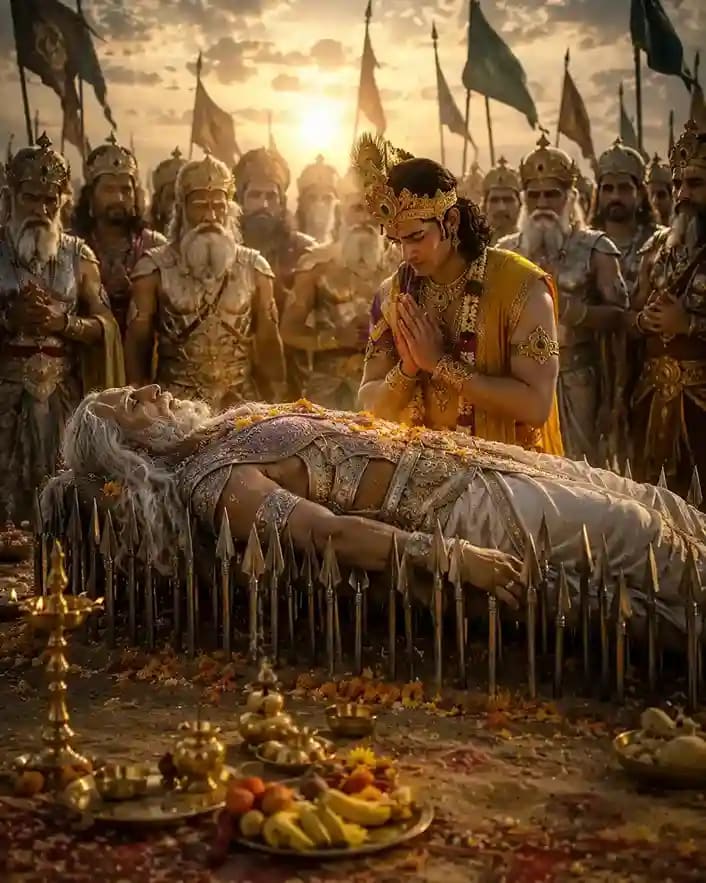
Bhishma Ashtami is observed on the Shukla Paksha Ashtami of the Magha month in honor of Bhishma Pitamah, the legendary grandsire of the Kuru dynasty in the Mahabharata. This day is specifically dedicated to performing Shraddha and Tarpan for Bhishma, as he had no sons to offer him ancestral rites. Devotees, considering themselves his spiritual descendants, offer oblations to his soul and pray for his blessings of courage, integrity, and unwavering commitment to dharma.
Bhishma was renowned for his terrible vow (Pratijna) of lifelong celibacy and service to the throne of Hastinapura. His life exemplified sacrifice, loyalty, and truthfulness under the most challenging circumstances. On Bhishma Ashtami, his teachings on statecraft, righteousness, and devotion are recalled, especially his exposition of the Shanti Parva and Anushasana Parva from the Mahabharata.
The day is marked by special prayers, recitation of the Bhagavad Gita and Vishnu Sahasranama, and charity. In many parts of India, particularly among the Kuru descendants and Brahmin communities, Bhishma Ashtami is treated with the same reverence as a Pitru Tithi, with offerings made to ensure the spiritual peace of the great patriarch.
Vrat Vidhi & Fasting Rules
Devotees perform ancestral offerings for Bhishma Pitamah and observe Vishnu worship to honor his life of sacrifice.
- Wake before sunrise, bathe, and wear clean white or light-colored clothes.
- Perform Tarpan and Pind Daan for Bhishma Pitamah using sesame seeds, barley, Kusha grass, and water.
- Recite the Bhagavad Gita, Vishnu Sahasranama, and chapters from the Mahabharata related to Bhishma.
- Observe a partial fast, consuming only satvik food after the Puja and charity.
- Donate food, clothes, and money to Brahmins and the needy in Bhishma's name.
- Meditate on the qualities of sacrifice, truth, and devotion exemplified by Bhishma Pitamah.
Puja Samagri & Ritual Steps
- Set up the Puja area with images or symbols representing Bhishma and Lord Vishnu.
- Perform Achamana and Sankalpa to offer Shraddha to Bhishma Pitamah.
- Offer Tarpan with sesame seeds and water while reciting mantras for the departed soul.
- Prepare Pindas and offer them to Brahmins, cows, dogs, and crows.
- Light a lamp and incense, recite the Vishnu Sahasranama, and conclude with Aarti.
Vrat Katha: Bhishma's Vow and His Need for Descendants
King Shantanu of Hastinapura wished to marry Satyavati, but her father refused unless her future son could inherit the throne.
Devavrata, Shantanu's son, took a solemn vow of lifelong celibacy and renunciation of the throne to enable his father's marriage.
Pleased by this terrible sacrifice, the gods showered flowers upon him and renamed him Bhishma, meaning 'one of terrible resolve'.
Because Bhishma never married and had no children, tradition holds that all righteous devotees should perform Tarpan for him on Bhishma Ashtami.
Bhishma Ashtami: Frequently Asked Questions
Magha Shukla Ashtami; its swami is Shiva, a Jaya Tithi.
Shukla Ashtami: 09:00 PM, Mon, Jan 31, 2039 to 11:34 PM, Tue, Feb 1, 2039 (IST).
Magha Shukla Ashtami: 02:03 PM, Sun, Feb 19, 2040 to 04:13 PM, Mon, Feb 20, 2040 (IST).
Bhishma had no sons, so devotees perform Tarpan and Shraddha for him, considering themselves his spiritual descendants.
Yes, it falls on Magha Shukla Ashtami, during the auspicious period when Bhishma lay on his bed of arrows and imparted his final teachings.
The Vishnu Sahasranama, Bhagavad Gita, and Mahabharata recitations related to Bhishma are considered most appropriate.
Festivals in the Same Lunar Month
Magha
Note: times are shown with their date; a Panchang day runs from sunrise to sunrise.
Recommended Pages
Comprehensive annual Hindu calendar with tithis and festivals.
Detailed month-wise view of lunar tithis and celestial events.
Marathi Panchang and festive dates for the year.
Gujarati Vikram Samvat calendar and festivals.
Telugu calendar and festive Panchangam details.
Tamil solar calendar dates and monthly Panchangam.