
Govatsa Dwadashi
festivalsAlso known as: Gau-Vatsal2, Vatsa Dvadashi
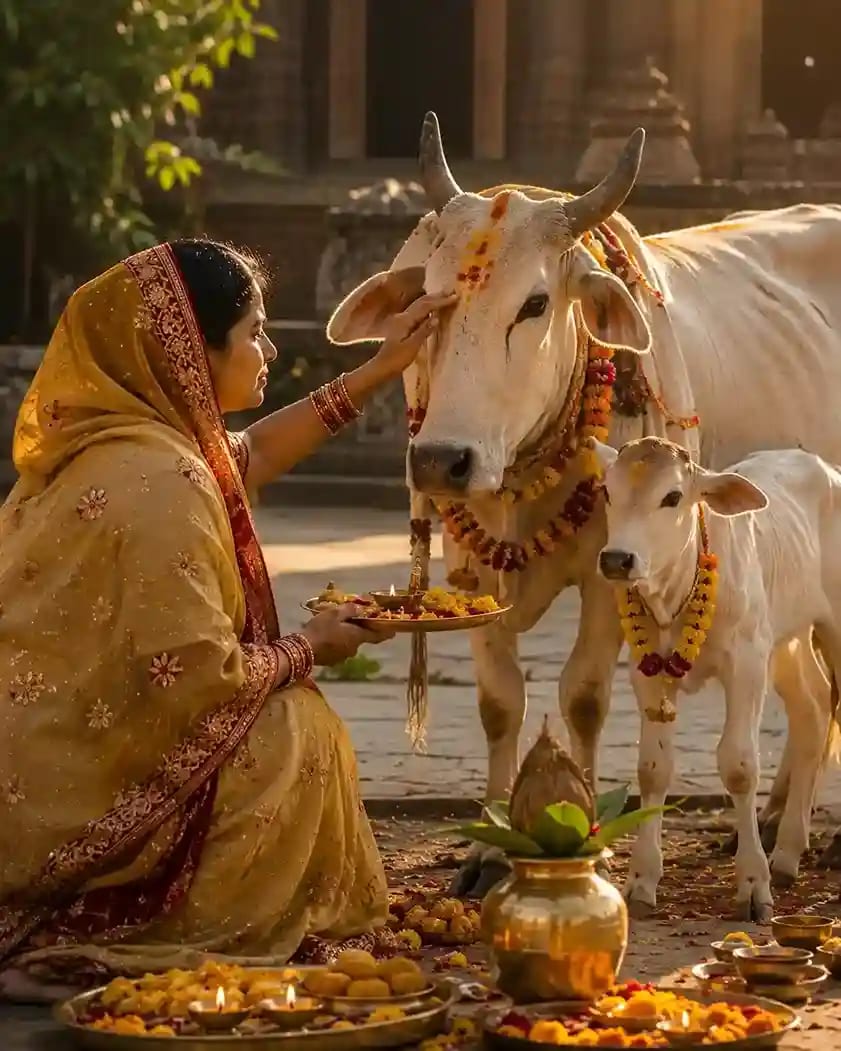
Govatsa Dwadashi
Govatsa Dwadashi at a Glance
Govatsa Dwadashi is fixed by the lunar calendar to Kartika Krishna Dwadashi, the 12th tithi of the waning (Krishna) fortnight of Kartika (Ashwin Krishna Dwadashi in the Amanta calendar).
- Tithi rule
- Kartika Krishna Dwadashi (Purnimanta)Krishna DwadashiKartika month
- Tithi swami and group
- Vishnu · Bhadra Tithi
About Govatsa Dwadashi
Govatsa Dwadashi, also called Vasu Baras, Nandini Vrata, or Bach Baras, is a festival that honours cows and calves as sacred embodiments of divine wealth. It falls on the Dwadashi of the Krishna Paksha in the month of Ashwin (amanta tradition) or Kartik (purnimanta tradition), just before the Diwali festivities.
Cows are revered as the earthly form of Kamadhenu, the wish-fulfilling celestial cow. Feeding and venerating cows on this day is believed to please Goddess Lakshmi, remove poverty, and ensure the health and happiness of children. The festival is therefore especially significant for mothers.
In many regions, Govatsa Dwadashi marks the first day of the five-day Diwali celebration. Families rise early, clean the cowshed, bathe the cattle, and prepare special wheat-based dishes to feed them. It is a day of gratitude toward the animals that sustain agriculture and human life.
Vrat Vidhi & Fasting Rules
Govatsa Dwadashi is observed by worshipping cows, fasting until evening, and offering wheat-based foods to cattle.
- Wake before sunrise, bathe, and clean the home and cowshed thoroughly.
- Bathe cows and calves with clean water; apply a tilak of turmeric and sandalwood on their foreheads and decorate their horns with garlands.
- Prepare wheat dishes such as chapatis, sweet porridge, or kheer and feed them to the cows first before the family eats.
- Perform a simple go-puja with incense, a lamp, and prayers to Kamadhenu.
- Observe a fast or eat only satvik food until the evening go-puja is complete.
- Listen to the Govatsa Dwadashi Katha and donate grains, fodder, or blankets to goshalas and the needy.
Vrat Katha: The Vow of Nandini
A devoted queen longed for a child and performed many rituals without success. One day, a sage advised her to observe the Govatsa Dwadashi fast and worship a cow with the devotion due to mother Kamadhenu.
On the Dwadashi, the queen bathed the royal cows, offered them fresh wheat dishes, and prayed sincerely for a child. Pleased by her devotion, the celestial cow Nandini appeared in a dream and blessed her.
Soon the queen conceived and gave birth to a healthy child. In gratitude, she established the tradition of worshipping cows on Govatsa Dwadashi.
Since then, mothers observe this vrata for the well-being of their children and for the prosperity of the household.
Govatsa Dwadashi: Frequently Asked Questions
Kartika Krishna Dwadashi (Ashwin Krishna Dwadashi in the Amanta calendar); its swami is Vishnu, a Bhadra Tithi.
Yes, in many traditions it marks the first day of the five-day Diwali festival, followed by Dhanteras, Narak Chaturdashi, Diwali, and Bhai Dooj.
Wheat-based preparations such as chapatis, sweet porridge, kheer, and jaggery are commonly offered.
Note: times are shown with their date; a Panchang day runs from sunrise to sunrise.
Recommended Pages
Comprehensive annual Hindu calendar with tithis and festivals.
Detailed month-wise view of lunar tithis and celestial events.
Marathi Panchang and festive dates for the year.
Gujarati Vikram Samvat calendar and festivals.
Telugu calendar and festive Panchangam details.
Tamil solar calendar dates and monthly Panchangam.