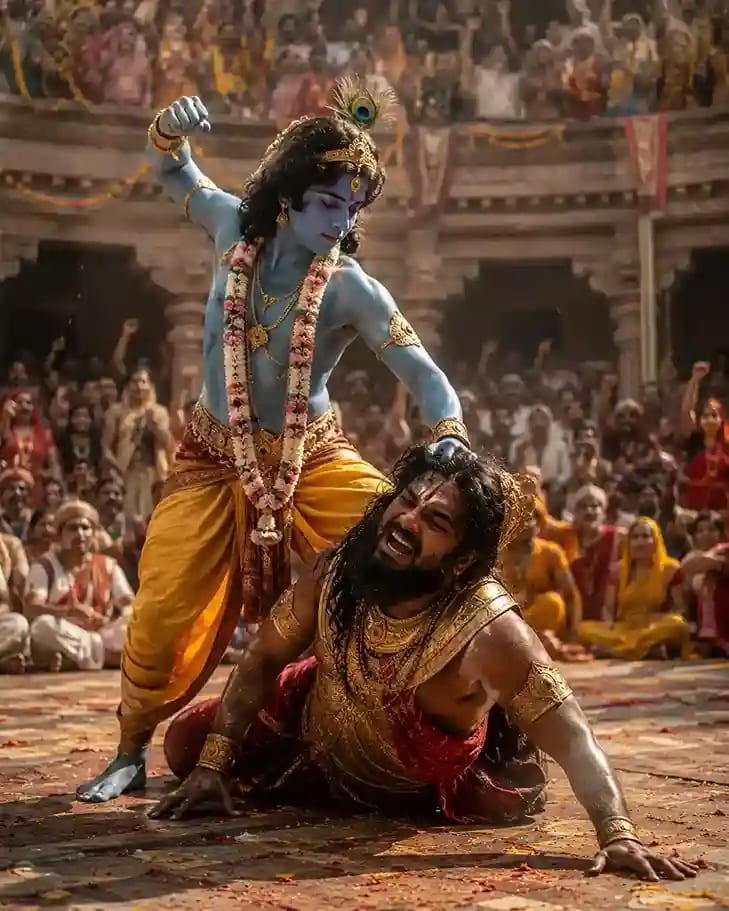
Kansa Vadh is a significant festival and dramatic reenactment that commemorates the slaying of the tyrannical King Kansa by Lord Krishna. Kansa, the maternal uncle of Krishna and Balarama, ruled the kingdom of Mathura with cruelty and oppression. After a divine prophecy foretold that Devaki's eighth child would kill him, Kansa imprisoned his sister and brother-in-law and murdered their first six children. However, Krishna survived and eventually liberated Mathura from Kansa's tyranny.
The event holds deep symbolic meaning in Hindu tradition. Kansa represents ego, injustice, and demonic forces that suppress truth and righteousness. Krishna's victory over Kansa signifies the triumph of divine will, dharma, and devotion over arrogance and oppression. The story is a central narrative in the Bhagavata Purana and is dramatically performed as 'Kansa Vadh' during the festive season, especially around Krishna Janmashtami and in the Braj region.
In many parts of North India, particularly in Uttar Pradesh, Haryana, and Rajasthan, elaborate folk dramas and Raslila performances depict the life of Krishna, culminating in the dramatic scene of Kansa's defeat. These performances, accompanied by music, dance, and devotional fervor, keep the ancient epic alive and inspire audiences with the eternal message of good triumphing over evil.