
Kumar Shashthi
festivals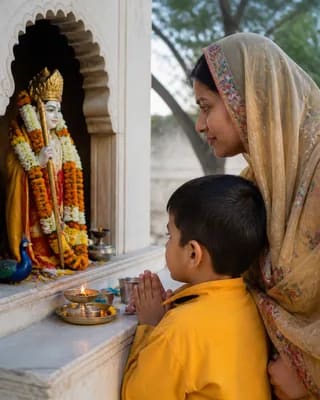
Kumar Shashthi
Kumar Shashthi at a Glance
Kumar Shashthi is fixed by the lunar calendar to Ashadha Shukla Shashthi, the 6th tithi of the waxing (Shukla) fortnight of Ashadha.
- Tithi rule
- Ashadha Shukla Shashthi (Purnimanta)Shukla ShashthiAshadha month
- Tithi swami and group
- Kartikeya · Nanda Tithi
About Kumar Shashthi
Kumar Shashthi is a sacred observance falling on the Shashthi tithi, dedicated to Lord Kartikeya, the divine warrior-son of Lord Shiva and Goddess Parvati. Known by titles such as Skanda, Murugan, Shanmukha, and Kumara, he is revered as the commander of the celestial armies and the deity of courage, wisdom, and youthful spiritual victory.
The term 'Kumar' specifically highlights his eternal youth and celibate vigor, making this day especially significant for mothers who pray for the health, long life, and righteous character of their children. In many households, Kumar Shashthi is observed with great faith to protect sons from ailments, accidents, and negative planetary influences.
Although closely related to Skanda Shashthi, Kumar Shashthi carries a softer domestic emphasis, focusing on family welfare and the nurturing bond between mother and child. It is widely observed in North and Central Indian traditions alongside regional variations that include special prayers, devotional songs, and offerings of sweets to young boys.
The day is also considered auspicious for beginning a child's education, for overcoming delays in progeny-related matters, and for removing obstacles caused by the planet Mars (Mangal). Devotees believe that sincere worship on Kumar Shashthi invokes Lord Kartikeya's blessings for fearlessness and disciplined success.
Vrat Vidhi & Fasting Rules
Mothers observe a partial or complete fast and worship Lord Kartikeya to secure the well-being and longevity of their children.
- Wake before sunrise, bathe, and clean the home altar thoroughly.
- Place an image or idol of Lord Kartikeya and offer red flowers, kumkum, sandalwood paste, and fresh fruits.
- Recite the Skanda Shashthi Kavacham, Subrahmanya Bhujangam, or 'Om Saravanabhavaya Namah' mantra at least 108 times.
- Prepare satvik food such as sweet pongal, kesari, or kheer, and offer it as Naivedyam before noon.
- Invite young boys for a ceremonial meal (Bhojan) and offer them Dakshina and gifts.
- If observing a full fast, break it after evening prayers with fruit and milk.
Puja Samagri & Ritual Steps
- Light a ghee lamp and incense before the deity.
- Apply tilak to the idol and offer flowers while chanting the Skanda mantra.
- Perform Abhishekam with Panchamrit if a consecrated idol is available.
- Recite the Skanda Sashti Kavacham or selected hymns from the Subrahmanya Bhujangam.
- Conclude with Arati and distribution of prasad to children and guests.
Vrat Katha: The Birth of Lord Kumar Kartikeya
The demon Tarakasura had received a boon that he could only be killed by the son of Lord Shiva. However, after the death of his first wife Sati, Shiva had withdrawn into deep meditation and renounced the world.
The gods sought the help of Parvati, the reincarnation of Sati, who performed severe penance to win Shiva's hand in marriage. Eventually, Shiva and Parvati were united in divine matrimony.
From the divine spark of Shiva's third eye, six radiant infants were born and nurtured by the Krittika maidens in the constellation of the Pleiades. These six infants later merged into one resplendent form with six faces and twelve arms—Lord Kumar Kartikeya.
Kumar Kartikeya grew into a mighty commander and led the celestial armies to victory over the forces of Tarakasura, restoring cosmic order and proving that divine youth carries the power of eternal righteousness.
Kumar Shashthi: Frequently Asked Questions
Ashadha Shukla Shashthi; its swami is Kartikeya, a Nanda Tithi.
Both honor Lord Kartikeya. Kumar Shashthi often emphasizes prayers for children's welfare and maternal devotion, while Skanda Shashthi is a six-day fast commemorating the divine war against the demon Surapadma.
Yes, childless couples often observe this fast with special prayers to Lord Kartikeya for the blessing of virtuous children and the removal of obstacles related to progeny.
The mantra 'Om Saravanabhavaya Namah' is considered highly powerful for protection, wisdom, and overcoming difficulties related to children.
Note: times are shown with their date; a Panchang day runs from sunrise to sunrise.
Recommended Pages
Comprehensive annual Hindu calendar with tithis and festivals.
Detailed month-wise view of lunar tithis and celestial events.
Marathi Panchang and festive dates for the year.
Gujarati Vikram Samvat calendar and festivals.
Telugu calendar and festive Panchangam details.
Tamil solar calendar dates and monthly Panchangam.