
Narasimha Jayanti
festivalsQuick Overview
- Date in 2034
- Monday, May 1, 2034
- Tithi
- Vaisakha Shukla Chaturdashi (Purnimanta)
- Tithi begins / ends
- 12:43 PM, May 01 to 03:14 PM, May 02
- Lunar month
- Vaisakha · Shukla Paksha
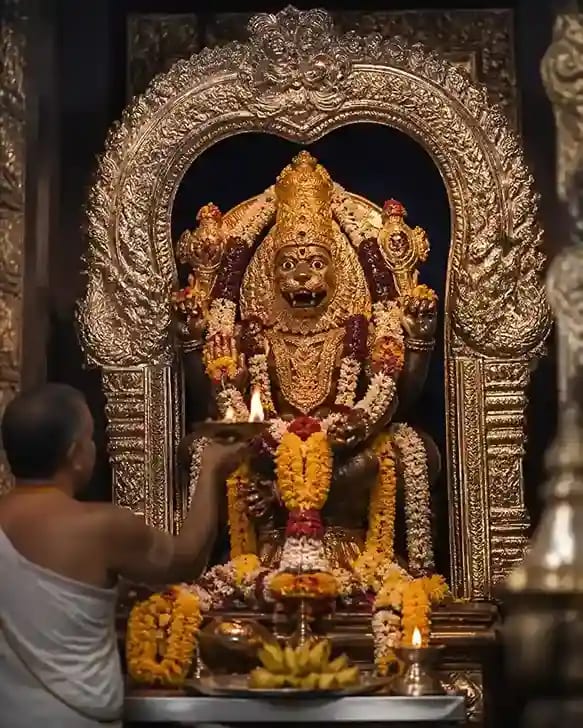
Narasimha Jayanti
Monday, May 1, 2034
Lunar Month: Vaisakha
Narasimha Jayanti at a Glance
Narasimha Jayanti is fixed by the lunar calendar to Vaisakha Shukla Chaturdashi, the 14th tithi of the waxing (Shukla) fortnight of Vaisakha.
- Tithi rule
- Vaisakha Shukla Chaturdashi (Purnimanta)Shukla ChaturdashiVaisakha month
- Tithi swami and group
- Shiva · Rikta Tithi
Panchanga on This Day
Narasimha Jayanti · May 1, 2034
About Narasimha Jayanti
Narasimha Jayanti commemorates the divine appearance of Lord Narasimha, the fourth incarnation (avatar) of Lord Vishnu and one of the most awe-inspiring forms in Hindu theology. Combining the body of a man and the head of a lion, Narasimha manifested to protect his young devotee Prahlad and to destroy the demon king Hiranyakashipu.
The story of Narasimha is a profound testament to the power of unwavering devotion (Bhakti) and divine justice. Hiranyakashipu had received a boon making him virtually indestructible: he could not be killed by man or beast, by day or night, indoors or outdoors, on earth or in sky, by any weapon. Yet the Lord found a way to overcome every condition through his leonine-man form.
Narasimha Jayanti falls on the Vrishchika Lagna (Simha Lagna in some traditions) during the Shukla Paksha Chaturdashi of Vaishakha month. Devotees fast, perform Abhishekam, and recite the Narasimha Kavacha to seek protection from enemies, diseases, and negative planetary influences.
The deity is especially worshipped as a protector against black magic, severe ailments, and court troubles. His fierce compassion assures devotees that divine help arrives precisely when all worldly remedies fail.
Vrat Vidhi & Fasting Rules
Devotees observe fasting and worship Lord Narasimha to seek protection, courage, and the destruction of evil forces.
- Wake before sunrise and take a purifying bath.
- Observe a strict fast from sunrise to the next day's sunrise, consuming only fruits and milk if necessary.
- Perform Abhishekam to a Narasimha idol with Panchamrit, milk, curd, honey, and ghee.
- Recite the Narasimha Kavacha Stotra, Narasimha Purana, or 'Om Ugram Viram Maha Vishnum' mantra.
- Offer red flowers, kumkum, and sweets to the deity.
- Break the fast on the next day after morning Puja and charity.
Puja Samagri & Ritual Steps
- Purify the altar and install the Narasimha deity.
- Perform Abhishekam with Panchamrit followed by holy water.
- Adorn the idol with red cloth, flowers, and sandalwood tilak.
- Recite the Narasimha Kavacha and selected stotras.
- Offer Naivedyam and light a ghee lamp and incense.
- Conclude with Arati and prayers for protection and fearlessness.
Vrat Katha: The Appearance of Lord Narasimha
Hiranyakashipu, the mighty demon king, had performed severe penance and received a boon from Lord Brahma that made him nearly immortal.
He declared himself God and forbade all worship except to himself. However, his young son Prahlad was a devoted worshipper of Lord Vishnu.
Despite torture and threats, Prahlad refused to abandon his faith. Hiranyakashipu challenged him, asking if Vishnu existed within a nearby pillar.
From the pillar emerged Lord Narasimha, neither man nor beast, at twilight, neither day nor night. He placed the demon on his lap, neither earth nor sky, and killed him with his claws, fulfilling the boon's conditions perfectly.
Narasimha Jayanti: Frequently Asked Questions
Vaisakha Shukla Chaturdashi; its swami is Shiva, a Rikta Tithi.
Shukla Chaturdashi: 12:43 PM, Mon, May 1, 2034 to 03:14 PM, Tue, May 2, 2034 (IST).
Vaisakha Shukla Chaturdashi: 06:12 AM, Sun, May 20, 2035 to 07:56 AM, Mon, May 21, 2035 (IST).
Lord Vishnu appeared as Narasimha to protect his devotee Prahlad and to destroy the tyrannical demon Hiranyakashipu, who could not be killed by ordinary means.
The Narasimha Kavacha and the mantra 'Om Ugram Viram Maha Vishnum Jvalantam Sarvato Mukham' are considered highly protective.
It grants protection from enemies, black magic, diseases, and legal troubles, while strengthening faith and courage.
Festivals in the Same Lunar Month
Vaisakha
Note: times are shown with their date; a Panchang day runs from sunrise to sunrise.
Recommended Pages
Comprehensive annual Hindu calendar with tithis and festivals.
Detailed month-wise view of lunar tithis and celestial events.
Marathi Panchang and festive dates for the year.
Gujarati Vikram Samvat calendar and festivals.
Telugu calendar and festive Panchangam details.
Tamil solar calendar dates and monthly Panchangam.