
Rama Navami
festivalsQuick Overview
- Date in 2026
- Thursday, March 26, 2026
- Tithi
- Chaitra Shukla Navami (Purnimanta)
- Tithi begins / ends
- 11:49 AM, Mar 26 to 10:07 AM, Mar 27
- Lunar month
- Chaitra · Shukla Paksha
- Also on this tithi
- Swaminarayan Jayanti
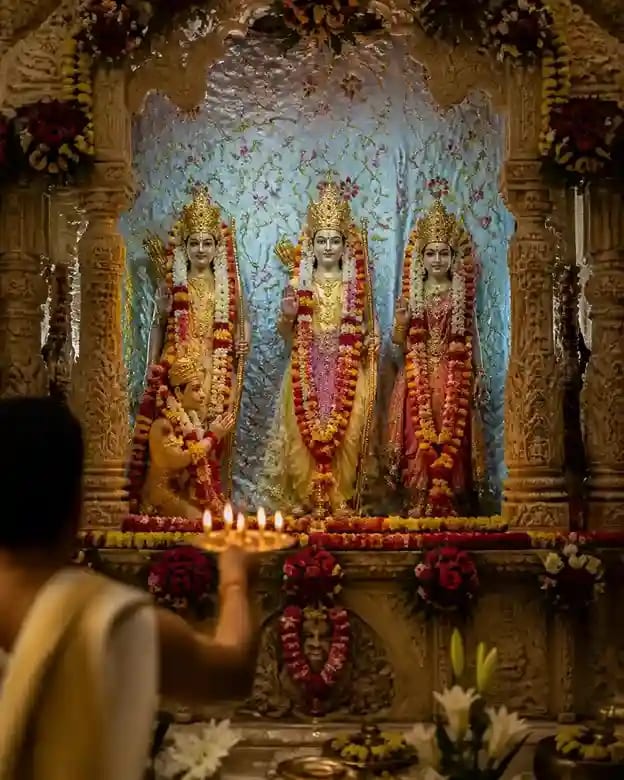
Rama Navami
Thursday, March 26, 2026
Lunar Month: Chaitra
Rama Navami at a Glance
Rama Navami is fixed by the lunar calendar to Chaitra Shukla Navami, the 9th tithi of the waxing (Shukla) fortnight of Chaitra.
- Tithi rule
- Chaitra Shukla Navami (Purnimanta)Shukla NavamiChaitra month
- Tithi swami and group
- Durga · Rikta Tithi
- Also on this tithi
- Swaminarayan Jayanti
Panchanga on This Day
Rama Navami · Mar 26, 2026
About Rama Navami
Rama Navami celebrates the birth of Lord Rama, the seventh avatar of Lord Vishnu and the hero of the epic Ramayana. It falls on the Navami (ninth day) of the Shukla Paksha in the lunar month of Chaitra, usually in March or April, and marks the culmination of the nine-day Chaitra Navratri.
Lord Rama is worshipped as Maryada Purushottama—the ideal man, son, husband, brother, and king. His life exemplifies dharma, righteousness, compassion, and unwavering commitment to truth, even in the face of immense adversity.
The festival is celebrated with great fervor across India and the world. In Ayodhya, the birthplace of Rama, massive processions, special pujas, and the recitation of the Ramcharitmanas draw millions. In South India, temples host the celestial wedding (kalyanotsavam) of Rama and Sita.
Vrat Vidhi & Fasting Rules
Devotees fast, recite sacred texts, and worship Lord Rama in his infant form (Balak Ram) during the auspicious Madhyahna period.
- Rise during Brahma Muhurta, take a purifying bath, and make a sankalpa to observe the Navami fast (nirjala, fruit, or single satvik meal).
- Install or visit an image of Rama Darbar: Rama, Sita, Lakshmana, and Hanuman.
- Recite or listen to the Ramayana, Ramcharitmanas, or Ram Raksha Stotra, especially during the Madhyahna (noon) time when Rama is believed to have been born.
- Perform abhisheka and offer yellow flowers, Tulasi leaves, sweets, and fruits to the deity.
- Visit a Rama temple, participate in bhajans and kirtans, and donate food, clothes, or scriptures to the needy.
- Break the fast after the Madhyahna puja and distribution of prasad.
Puja Samagri & Ritual Steps
- Clean the altar and install the Rama Darbar with a kalash filled with water and mango leaves.
- Invoke Lord Rama and perform panchamrit abhisheka.
- Dress the deities, apply tilak, and adorn with flower garlands.
- Offer incense, lamp, flowers, Tulasi, and bhoga.
- Chant the Rama Gayatri and Ram Raksha Stotra.
- Perform arati and distribute prasad to family and guests.
Vrat Katha: The Birth of Maryada Purushottama
King Dasharatha of Ayodhya, though powerful and virtuous, had no heir. Performing the Putra Kameshti yajna at the advice of the sage Rishyasringa, a divine being emerged from the sacred fire holding a bowl of celestial kheer.
The king divided the kheer among his three queens. Queen Kausalya conceived and gave birth to Rama on the ninth day of Chaitra Shukla Paksha, at the auspicious moment of Madhyahna. Celestial drums resounded, flowers rained from the heavens, and sages proclaimed the descent of Vishnu to uphold dharma.
Rama grew to be the ideal prince, later marrying Sita, defeating the demon king Ravana, and establishing the legendary kingdom of righteousness known as Rama Rajya. His birth is thus celebrated as the advent of divine order on Earth.
Rama Navami: Frequently Asked Questions
Chaitra Shukla Navami; its swami is Durga, a Rikta Tithi.
Shukla Navami: 11:49 AM, Thu, Mar 26, 2026 to 10:07 AM, Fri, Mar 27, 2026 (IST).
Swaminarayan Jayanti, also on Chaitra Shukla Navami.
Yes, it commemorates the birth of Lord Rama, the seventh incarnation of Lord Vishnu.
Rama is believed to have been born at the Madhyahna (noon) muhurta, so the fast is often observed until that time.
Rama Navami celebrates Rama’s birth, while Vijayadashami (Dussehra) celebrates his victory over the demon Ravana.
Festivals in the Same Lunar Month
Chaitra
Note: times are shown with their date; a Panchang day runs from sunrise to sunrise.
Recommended Pages
Comprehensive annual Hindu calendar with tithis and festivals.
Detailed month-wise view of lunar tithis and celestial events.
Marathi Panchang and festive dates for the year.
Gujarati Vikram Samvat calendar and festivals.
Telugu calendar and festive Panchangam details.
Tamil solar calendar dates and monthly Panchangam.