
Ramanujacharya Jayanti
festivalsQuick Overview
- Date in 2026
- Wednesday, April 22, 2026
- Tithi
- Vaisakha Shukla Shashthi (Purnimanta)
- Tithi begins / ends
- 01:20 AM, Apr 22 to 10:50 PM, Apr 22
- Lunar month
- Vaisakha · Shukla Paksha
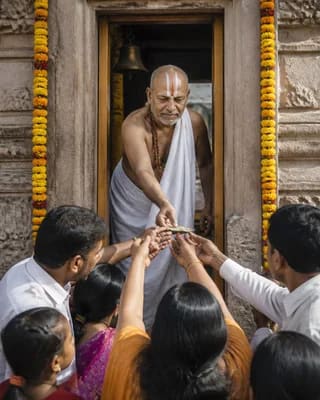
Ramanujacharya Jayanti
Wednesday, April 22, 2026
Lunar Month: Vaisakha
Ramanujacharya Jayanti at a Glance
Ramanujacharya Jayanti is fixed by the lunar calendar to Vaisakha Shukla Shashthi, the 6th tithi of the waxing (Shukla) fortnight of Vaisakha.
- Tithi rule
- Vaisakha Shukla Shashthi (Purnimanta)Shukla ShashthiVaisakha month
- Tithi swami and group
- Kartikeya · Nanda Tithi
Panchanga on This Day
Ramanujacharya Jayanti · Apr 22, 2026
About Ramanujacharya Jayanti
Ramanujacharya Jayanti commemorates the birth of Sri Ramanuja, the great 11th–12th century Indian philosopher, theologian, and social reformer who was the foremost exponent of Vishishtadvaita Vedanta and Sri Vaishnavism. Born in Sriperumbudur, Tamil Nadu, he revitalized temple worship, devotional practice, and the philosophy of qualified non-dualism.
Ramanuja taught that the individual soul (jiva) is distinct yet inseparable from Brahman, and that the Supreme Lord (Narayana) is a personal, all-pervading reality full of auspicious qualities. He emphasized that bhakti (loving devotion) and prapatti (complete surrender) are the surest means to liberation.
He authored profound commentaries such as the Sri Bhashya on the Brahma Sutras, the Gita Bhashya, and the Vedartha Samgraha. He also opened the doors of temples and spiritual knowledge to people of all backgrounds, earning him the titles Udayavar and Emperumanar.
Ramanuja’s Jayanti is observed by Sri Vaishnavas through special worship, recitation of his works, processions, and annadanam (free distribution of food). His teachings continue to shape millions of devotees across South India and beyond.
Vrat Vidhi & Fasting Rules
The day is observed as a sacred commemoration of the acharya’s wisdom, through fasting, scriptural study, and Vishnu worship.
- Wake early, bathe, and wear clean traditional attire. Resolve to follow the acharya’s teachings of humility and devotion.
- Visit a Vishnu or Sri Vaishnava temple; if at home, install an image or picture of Ramanuja alongside Lord Vishnu and Goddess Lakshmi.
- Recite selections from the Bhagavad Gita, Vishnu Sahasranama, or Ramanuja’s Gita Bhashya.
- Observe a light fast or take only satvik food once during the day, avoiding onions, garlic, and tamasic items.
- Listen to or narrate the life and teachings of Ramanuja, emphasizing his compassion and social inclusiveness.
- Participate in annadanam or contribute to charitable feeding, following the acharya’s ideal of service to all devotees.
Puja Samagri & Ritual Steps
- Arrange the deities of Ramanuja and Vishnu on a clean altar with a kalash.
- Offer panchamrit and water for abhisheka or padya (washing of feet) to Ramanuja’s image.
- Apply tilak and adorn with flowers and Tulasi.
- Recite the Vishnu Sahasranama or Gita verses.
- Offer bhoga and perform arati with devotion.
- Distribute prasad and honor guests and scholars.
Vrat Katha: Ramanuja Shares the Sacred Mantra
Ramanuja received a powerful sacred mantra from his guru with strict instructions not to reveal it to anyone. However, his heart overflowed with compassion for all beings, and he believed that divine knowledge should be freely available to everyone.
Climbing the high tower of a temple, he called out the mantra aloud so that all who wished to hear could receive its blessings. When his guru learned of this, he was upset at first, for the mantra had been given in confidence. Yet he soon recognized Ramanuja's boundless compassion and declared, "Only one who sees all beings as children of God is fit to hold the highest teaching." From that day, Ramanuja opened the doors of devotion to all.
Ramanujacharya Jayanti: Frequently Asked Questions
Vaisakha Shukla Shashthi; its swami is Kartikeya, a Nanda Tithi.
Shukla Shashthi: 01:20 AM, Wed, Apr 22, 2026 to 10:50 PM, Wed, Apr 22, 2026 (IST).
Vaisakha Shukla Shashthi: 03:49 AM, Tue, May 11, 2027 to 01:24 AM, Wed, May 12, 2027 (IST).
It is the philosophy of qualified non-dualism: the soul is distinct yet eternally dependent on Brahman, and the Supreme Lord possesses infinite auspicious qualities.
He made temple worship, Vedic knowledge, and devotional practices accessible to people of all castes and backgrounds.
Srirangam, Melukote, and the Varadaraja Perumal temple in Kanchipuram are closely associated with his life.
Festivals in the Same Lunar Month
Vaisakha
Note: times are shown with their date; a Panchang day runs from sunrise to sunrise.
Recommended Pages
Comprehensive annual Hindu calendar with tithis and festivals.
Detailed month-wise view of lunar tithis and celestial events.
Marathi Panchang and festive dates for the year.
Gujarati Vikram Samvat calendar and festivals.
Telugu calendar and festive Panchangam details.
Tamil solar calendar dates and monthly Panchangam.