
Rishi Panchami
festivalsAlso known as: Rishi 5, Rishi Tarpana (Samvedic)
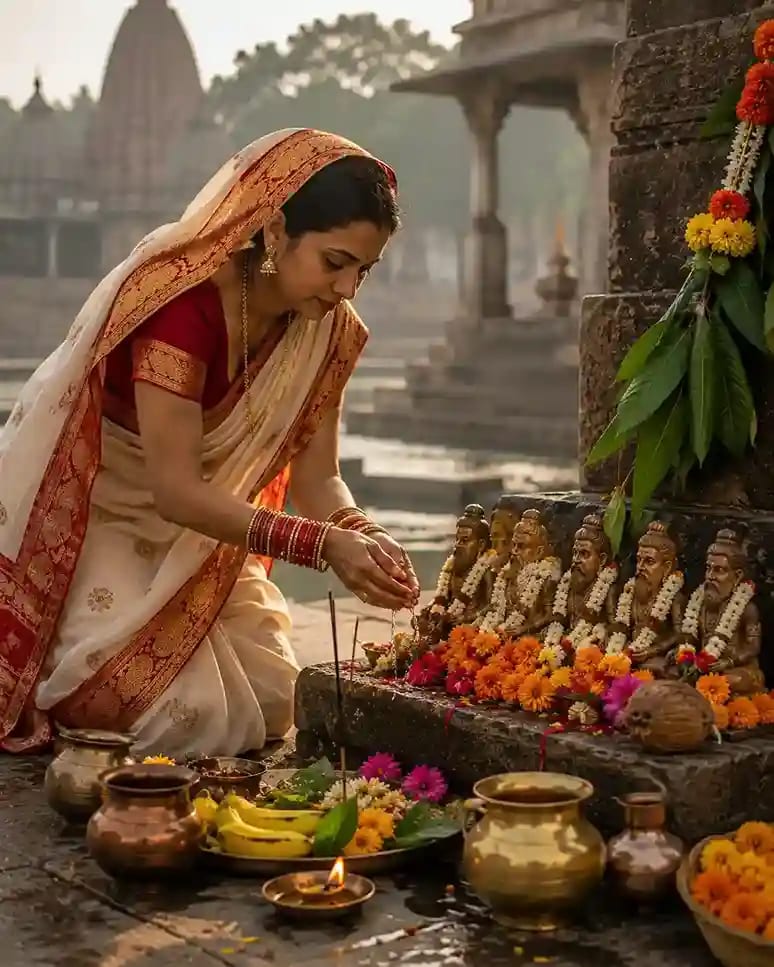
Rishi Panchami
Rishi Panchami at a Glance
Rishi Panchami is fixed by the lunar calendar to Bhadrapada Shukla Panchami, the 5th tithi of the waxing (Shukla) fortnight of Bhadrapada.
- Tithi rule
- Bhadrapada Shukla Panchami (Purnimanta)Shukla PanchamiBhadrapada month
- Tithi swami and group
- Naga · Purna Tithi
About Rishi Panchami
Rishi Panchami is observed on the fifth day (Panchami) of the Shukla Paksha in the lunar month of Bhadrapada, immediately following Ganesh Chaturthi. The festival is dedicated to the worship of the Saptarishi—the seven great sages—and to seeking purification from Rajaswala Dosha, the ritual impurity associated with menstruation.
The seven sages venerated are Kashyapa, Atri, Bharadvaja, Vishvamitra, Gautama, Jamadagni, and Vasishtha, along with Arundhati, the wife of Sage Vasishtha. Women traditionally observe a fast and perform rituals to honor these rishis and pray for the well-being of their families.
While primarily observed by women, men may also fast for the welfare of their wives. The day emphasizes cleanliness, self-discipline, and gratitude toward the ancient seers whose spiritual lineage preserved Vedic wisdom.
Vrat Vidhi & Fasting Rules
The fast and rituals are performed to purify sins incurred through unknowing transgressions during menstruation and to honor the seven sages.
- Wake before sunrise, take a holy bath (preferably in a river or with water mixed with sesame), and wear clean clothes.
- Observe a strict fast or consume only satvik food once after the puja, avoiding grains, onions, garlic, and non-vegetarian food.
- Draw a ritual diagram or install images of the Saptarishi and Arundhati on a clean altar.
- Offer betel leaves, flowers, camphor, and a lamp to each sage; recite the names of the Saptarishi.
- Listen to the Rishi Panchami Katha, which narrates how observing this vow purifies karmic faults.
- Feed Brahmin scholars or donate dakshina, and break the fast after sighting the moon or as per family tradition.
Puja Samagri & Ritual Steps
- Clean the altar and write or place the names of the seven sages.
- Offer arghya (water mixed with sesame and kusha) to the Saptarishi.
- Apply tilak and offer betel leaves, flowers, and incense to each sage.
- Light a lamp and camphor and recite prayers glorifying the rishis.
- Offer prasad and dakshina to scholars or elders.
- Conclude with aarti and a prayer for forgiveness and purification.
Vrat Katha: The Purifying Vow of Rishi Panchami
In a previous life, a devoted Brahmin woman named Chandrawati unknowingly transgressed ritual rules during her menstrual period. As a karmic consequence, she was reborn as a leopardess, unable to speak or perform sacred duties.
One day, she came upon a group of sages observing Rishi Panchami. Drawn by past devotion, she sat silently and listened to the katha. The sacred vibrations of the vow and the blessings of the Saptarishi gradually dissolved her karma.
That very night, she was freed from her animal form and reborn as a pious human. Ever since, Rishi Panchami has been observed as a powerful means of purification and forgiveness, especially for women seeking to remove the effects of Rajaswala Dosha.
Rishi Panchami: Frequently Asked Questions
Bhadrapada Shukla Panchami; its swami is Naga, a Purna Tithi.
Yes, men may also fast and worship the Saptarishi for the welfare of their wives and families.
The Saptarishi—Kashyapa, Atri, Bharadvaja, Vishvamitra, Gautama, Jamadagni, and Vasishtha—along with Arundhati.
Most devotees observe at least a partial fast or a strict satvik diet, though exact customs vary by family tradition.
Note: times are shown with their date; a Panchang day runs from sunrise to sunrise.
Recommended Pages
Comprehensive annual Hindu calendar with tithis and festivals.
Detailed month-wise view of lunar tithis and celestial events.
Marathi Panchang and festive dates for the year.
Gujarati Vikram Samvat calendar and festivals.
Telugu calendar and festive Panchangam details.
Tamil solar calendar dates and monthly Panchangam.