
Nag Panchami
festivalsAlso known as: Nag Panchami
Quick Overview
- Date in 2026
- Sunday, August 16, 2026
- Tithi
- Shravana Shukla Panchami (Purnimanta)
- Tithi begins / ends
- 04:53 PM, Aug 16 to 05:01 PM, Aug 17
- Lunar month
- Shravana · Shukla Paksha
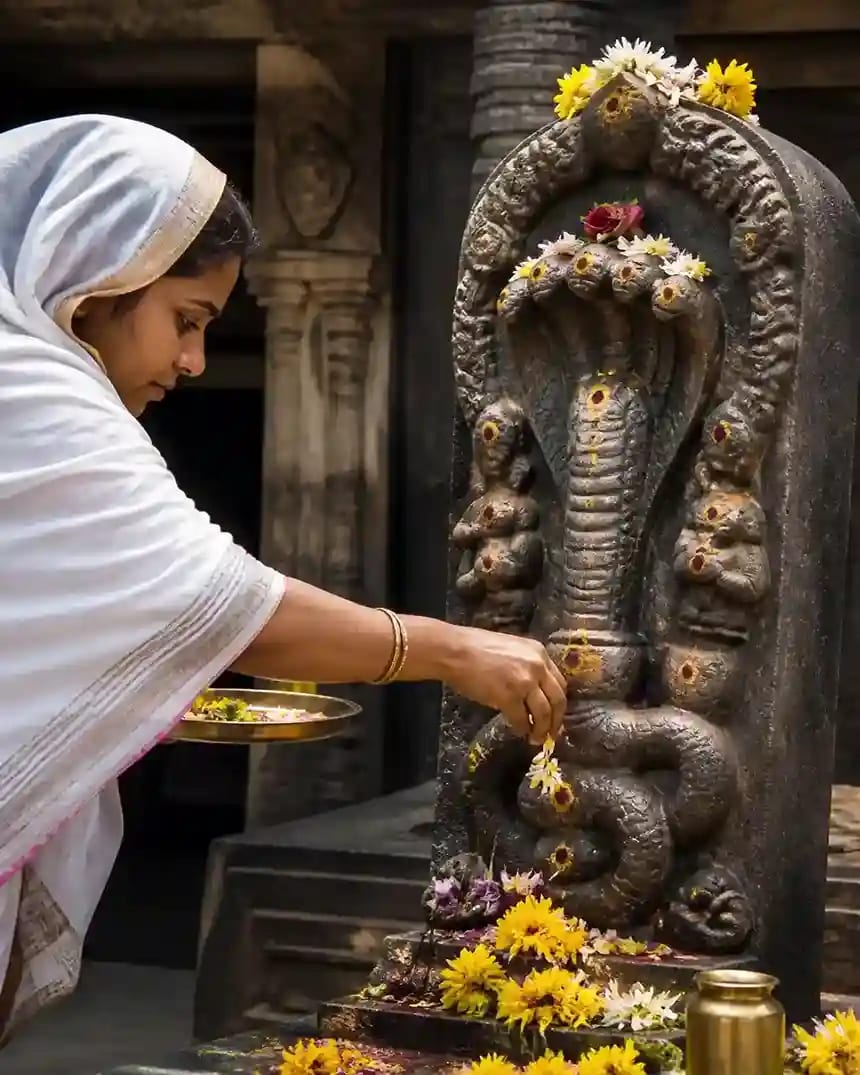
Nag Panchami
Sunday, August 16, 2026
Lunar Month: Shravana
Nag Panchami at a Glance
Nag Panchami is fixed by the lunar calendar to Shravana Shukla Panchami, the 5th tithi of the waxing (Shukla) fortnight of Shravana.
- Tithi rule
- Shravana Shukla Panchami (Purnimanta)Shukla PanchamiShravana month
- Tithi swami and group
- Naga · Purna Tithi
Panchanga on This Day
Nag Panchami · Aug 16, 2026
About Nag Panchami
Naga Panchami is a traditional Hindu festival dedicated to the worship of serpents (Nagas) and the serpent deities that protect the earth's treasures, water sources, and fertility. Observed on the fifth day (Panchami) of the Shukla Paksha in the month of Shravana, it reflects humanity's ancient reverence for the natural world and its co-inhabitants.
In Hindu mythology, Nagas are powerful celestial beings, often depicted as half-human and half-serpent. Shesha Naga serves as the bed of Lord Vishnu, Vasuki was used as the churning rope in the Samudra Manthan, and Takshaka is a famous king of the Nagas. Worshipping them on Naga Panchami is believed to protect against snake bites, ensure rainfall, and bless families with children and prosperity.
The festival is deeply connected to agricultural life. Snakes control rodents in the fields, and their worship acknowledges their ecological role. It is also believed that offerings made to Nagas on this day appease any serpent-related curses (Naga Dosha) and protect livestock and crops.
Women play a central role in Naga Panchami rituals. They fast, draw images of snakes on the walls or doorways of homes using turmeric and cow dung, and offer milk, sweets, flowers, and prayers. In many regions, brothers visit their married sisters, reinforcing familial bonds.
Vrat Vidhi & Fasting Rules
Devotees worship serpent deities, abstain from harming snakes, and offer milk and sweets to seek protection and prosperity.
- Wake early, bathe, and draw images of Nagas at the entrance of the home using turmeric, cow dung, or rangoli colors.
- Observe a fast, consuming only satvik food such as fruits and milk.
- Offer milk, sweets, flowers, and kumkum to snake idols, anthills, or images of Nagas.
- Strictly avoid digging the earth, ploughing, cutting greens, or harming any living creature.
- Recite the Naga Panchami Vrat Katha and Naga Stotra.
- Feed Brahmins or the poor and seek forgiveness for any harm caused to snakes.
Puja Samagri & Ritual Steps
- Clean the worship area and draw a five-headed serpent image on the floor or wall.
- Apply turmeric and kumkum to the image and place Durva grass before it.
- Offer milk, sweets, and honey in small bowls.
- Light incense and a ghee lamp while chanting Naga mantras.
- Recite the Naga Stotra or Naga Panchami Katha.
- Conclude with Arati and distribute prasad.
Vrat Katha: The Farmer and the Serpent Deity
Once, a farmer had two sons and a daughter. One day, while ploughing his field, the elder son accidentally killed three young snakes with his plough.
The mother snake, enraged, bit all three children in revenge, and they died instantly. The farmer and his wife were devastated.
The next day, the mother snake saw the grieving parents performing last rites. Moved by their sorrow, she appeared before them in divine form and explained that her children had died by accident.
She restored the farmer's children to life and blessed the family with prosperity. From that day, people began worshipping Nagas on Naga Panchami to seek forgiveness and protection from snake-related harm.
Nag Panchami: Frequently Asked Questions
Shravana Shukla Panchami; its swami is Naga, a Purna Tithi.
Shukla Panchami: 04:53 PM, Sun, Aug 16, 2026 to 05:01 PM, Mon, Aug 17, 2026 (IST).
Milk symbolizes nourishment and purity. Offering milk to serpent deities is believed to appease them and protect the family from snake bites.
Worship is usually directed toward images, idols, or snake anthills. Devotees are encouraged to respect all living creatures and avoid harming snakes.
Digging, ploughing, cutting vegetables, and any activity that could harm snakes or underground creatures are strictly avoided.
Festivals in the Same Lunar Month
Shravana
Note: times are shown with their date; a Panchang day runs from sunrise to sunrise.
Recommended Pages
Comprehensive annual Hindu calendar with tithis and festivals.
Detailed month-wise view of lunar tithis and celestial events.
Marathi Panchang and festive dates for the year.
Gujarati Vikram Samvat calendar and festivals.
Telugu calendar and festive Panchangam details.
Tamil solar calendar dates and monthly Panchangam.