
Shraddha
festivalsAlso known as: Pitrupaksha Begins, Shraddha, Sarva Pitru Amavasya
Quick Overview
- Date in 2030
- Friday, September 27, 2030
- Tithi
- Ashwin Shukla Pratipada (Purnimanta)
- Tithi begins / ends
- 03:25 PM, Sep 27 to 01:10 PM, Sep 28
- Lunar month
- Ashwin · Shukla Paksha
- Also on this tithi
- Navratri Begins, Shaarad Navaratra
Shraddha
Friday, September 27, 2030
Lunar Month: Ashwin
Shraddha at a Glance
Shraddha is fixed by the lunar calendar to Ashwin Shukla Pratipada, the 1st tithi of the waxing (Shukla) fortnight of Ashwin.
- Tithi rule
- Ashwin Shukla Pratipada (Purnimanta)Shukla PratipadaAshwin month
- Tithi swami and group
- Agni · Nanda Tithi
- Also on this tithi
- Navratri BeginsShaarad Navaratra
Panchanga on This Day
Shraddha · Sep 27, 2030
About Shraddha
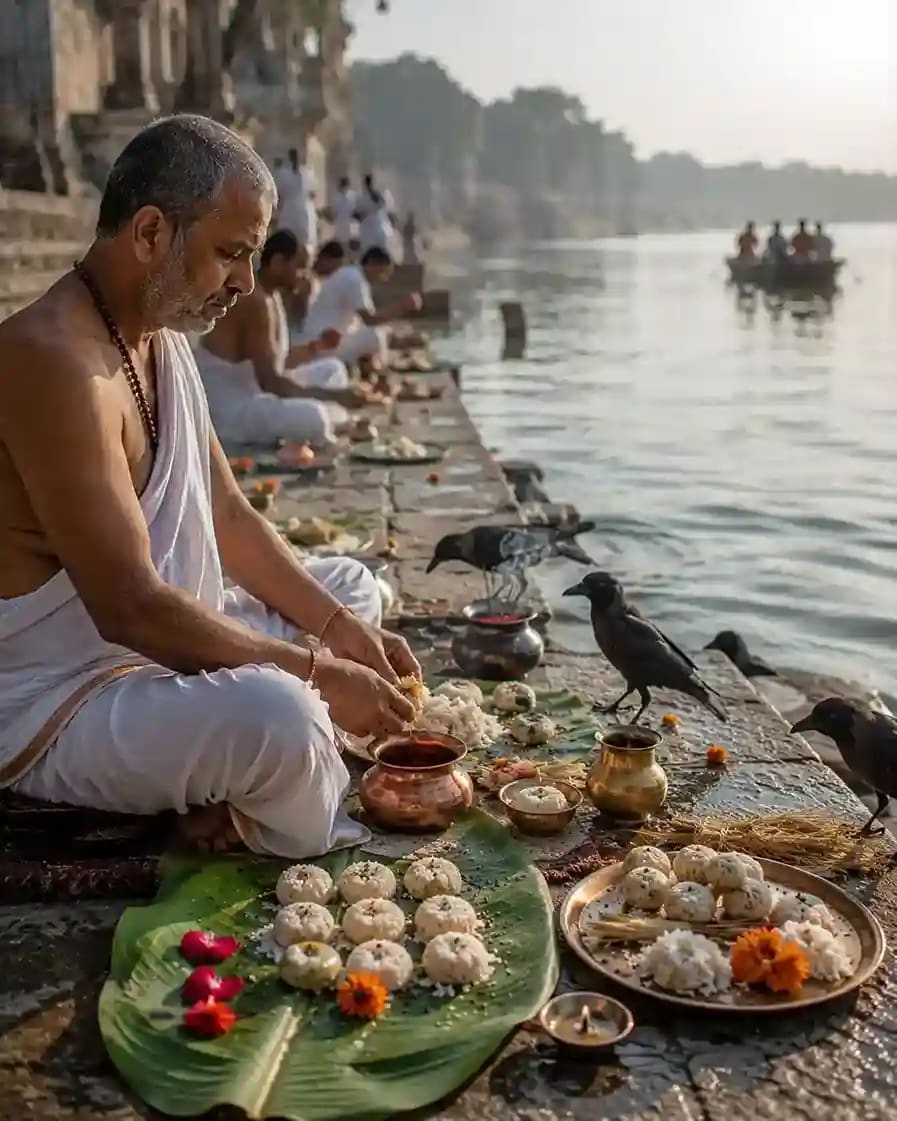
Pitru Paksha, also known as Mahalaya or the fortnight of the ancestors, is a sixteen-day lunar period in the Hindu calendar dedicated entirely to honoring deceased ancestors (Pitrus). It occurs during the Krishna Paksha of the Ashwin month and culminates with Sarva Pitru Amavasya, the new moon day when all ancestors are collectively remembered.
The central belief behind Pitru Paksha is that the souls of departed ancestors reside in the Pitru Loka, a realm between heaven and earth, and depend on the offerings of their descendants to sustain themselves and progress spiritually. Rituals performed during this fortnight provide nourishment, peace, and momentum toward liberation.
Each day of Pitru Paksha is associated with a specific type of offering or a particular ancestor. Families perform Shraddha, Tarpan, and Pind Daan, often under the guidance of a priest, using black sesame seeds, Kusha grass, rice balls, and water. The food offered is traditionally cooked with great care and served first to crows, cows, dogs, and priests before the family eats.
Beyond ancestral rites, Pitru Paksha is a time for reflection, charity, and forgiveness. It reminds devotees of the continuity of family lineage, the importance of gratitude, and the belief that honoring one's ancestors brings blessings, prosperity, and the resolution of Pitru Dosha in the family.
Vrat Vidhi & Fasting Rules
Families observe fasting, perform Shraddha and Tarpan, and offer food to ancestors, animals, and Brahmins throughout the fortnight.
- Rise early and bathe; begin the day with prayer and remembrance of ancestors.
- Perform Tarpan and Pind Daan during the Aparahna time (afternoon), which is most auspicious.
- Use black sesame seeds, Kusha grass, sacred water, and rice in all offerings.
- Prepare satvik food and offer it first to Brahmins, cows, dogs, and crows.
- Observe a simple diet; avoid non-vegetarian food, alcohol, onions, and garlic.
- Engage in charity, scriptural reading, and acts of compassion throughout the fortnight.
Puja Samagri & Ritual Steps
- Sit facing south and wear the sacred thread in theopposite shoulder (Pracheena Avritti).
- Invoke the ancestors and offer water mixed with sesame seeds (Tarpan).
- Prepare rice balls (Pindas) and offer them to the ancestors with mantras.
- Feed Brahmins and offer them Dakshina and clothes.
- Place portions of food outside for crows, cows, and dogs.
- Conclude with prayers for the peace and liberation of all departed souls.
Vrat Katha: Karna and the Fruit of Ancestral Offerings
After the great Kurukshetra war, the heroic Karna died and ascended to the heavens. There, he was offered only gold and jewels as food, which he could not eat.
Puzzled, Karna asked Indra the reason. Indra explained that although Karna had donated immense wealth during his life, he had never offered food to his ancestors.
Indra granted Karna fifteen days to return to Earth and make up for the missed offerings. Karna performed Shraddha, offered food, and satisfied his ancestors.
Because of this, the fifteen days of Pitru Paksha are considered sacred, ensuring that ancestors receive nourishment and that descendants receive their blessings.
Shraddha: Frequently Asked Questions
Ashwin Shukla Pratipada; its swami is Agni, a Nanda Tithi.
Shukla Pratipada: 03:25 PM, Fri, Sep 27, 2030 to 01:10 PM, Sat, Sep 28, 2030 (IST).
Ashwin Shukla Pratipada: 01:51 PM, Thu, Oct 16, 2031 to 01:00 PM, Fri, Oct 17, 2031 (IST).
Navratri Begins and Shaarad Navaratra, also on Ashwin Shukla Pratipada.
Pitru Paksha lasts for fifteen or sixteen lunar days during the Krishna Paksha of the Ashwin month, ending with Sarva Pitru Amavasya.
Crows are traditionally believed to be messengers of the ancestors. When a crow accepts the offered food, it is seen as a sign that the ancestors have received the offering.
Pitru Dosha is a karmic affliction believed to arise when ancestors are not properly honored. It can manifest as obstacles in progeny, health, career, and family harmony.
Festivals in the Same Lunar Month
Ashwin
Note: times are shown with their date; a Panchang day runs from sunrise to sunrise.
Recommended Pages
Comprehensive annual Hindu calendar with tithis and festivals.
Detailed month-wise view of lunar tithis and celestial events.
Marathi Panchang and festive dates for the year.
Gujarati Vikram Samvat calendar and festivals.
Telugu calendar and festive Panchangam details.
Tamil solar calendar dates and monthly Panchangam.