
Lakshmi Puja
festivalsQuick Overview
- Date in 2030
- Saturday, October 26, 2030
- Tithi
- Kartika Krishna Amavasya (Purnimanta)
- Tithi begins / ends
- 04:41 AM, Oct 26 to 01:47 AM, Oct 27
- Lunar month
- Kartika · Krishna Paksha
Lakshmi Puja
Saturday, October 26, 2030
Lunar Month: Kartika
Lakshmi Puja at a Glance
Lakshmi Puja is fixed by the lunar calendar to Kartika Krishna Amavasya, the 15th tithi of the waning (Krishna) fortnight of Kartika (Ashwin Krishna Amavasya in the Amanta calendar).
- Tithi rule
- Kartika Krishna Amavasya (Purnimanta)Krishna AmavasyaKartika month
- Tithi swami and group
- Pitra · Purna Tithi
Panchanga on This Day
Lakshmi Puja · Oct 26, 2030
About Lakshmi Puja
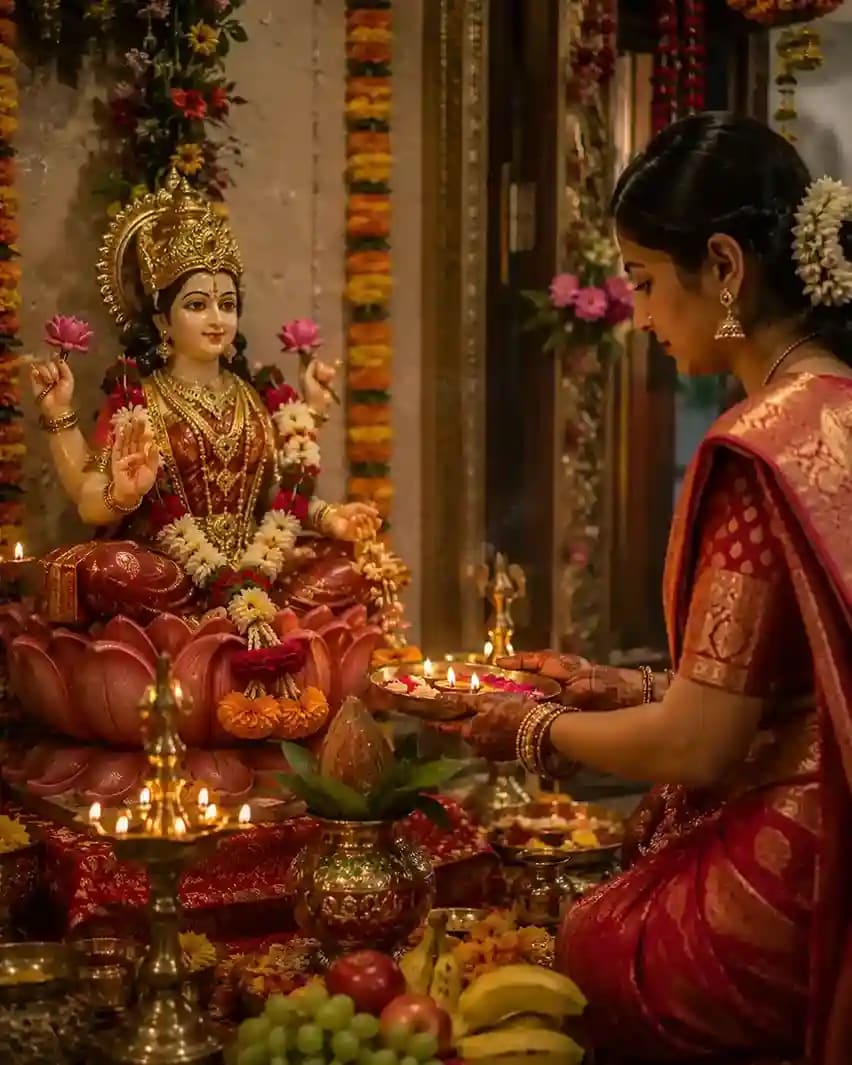
Lakshmi Puja is one of the most cherished and widely performed rituals in Hindu households, dedicated to Goddess Lakshmi, the divine consort of Lord Vishnu and the supreme deity of wealth, prosperity, fortune, and auspiciousness. While it is most famously performed during Diwali, Lakshmi Puja is also observed on Fridays, Purnima, Ekadashi, and during the holy month of Margashirsha.
Goddess Lakshmi is described in the Puranas as radiant as gold, seated upon a lotus, and surrounded by elephants showering her with water. She represents not merely material riches but also the abundance of virtue, knowledge, fertility, and spiritual light. Her eight forms (Ashta Lakshmi) govern different domains of prosperity including food, courage, victory, offspring, and spiritual liberation.
The ritual is deeply rooted in the belief that Goddess Lakshmi only resides in places that are clean, virtuous, and devotional. Therefore, devotees clean their homes thoroughly, illuminate every corner with oil lamps, and create an atmosphere of purity and joy to invite her presence.
Regional variations enrich the observance: in Bengal, it is performed on Kojagara Purnima; in South India, it forms part of Varalakshmi Vratam; and in business communities, elaborate account books are worshipped as symbols of her grace.
Vrat Vidhi & Fasting Rules
Devotees fast, clean their homes, and perform an elaborate evening Puja to invite and honor Goddess Lakshmi.
- Clean the entire house early in the morning; Goddess Lakshmi is believed to avoid unclean spaces.
- Take a holy bath and wear new or clean clothes, preferably in red, pink, or yellow.
- Draw Rangoli and place auspicious footprints (Lakshmi Paduka) pointing inward at the main entrance.
- Set up the altar with an idol or image of Goddess Lakshmi, often alongside Lord Ganesha and Kubera.
- Observe a fast until the evening Puja is completed; break it with prasad after Aarti.
- Light numerous oil lamps (diyas) around the home, especially in corners and near the threshold.
Puja Samagri & Ritual Steps
- Purify the Puja area and install the Kalash.
- Invoke Lord Ganesha first to remove obstacles.
- Perform Abhishekam to the Lakshmi idol with Panchamrit, followed by sacred water.
- Adorn the deity with new clothes, jewelry, and flowers.
- Recite Lakshmi Suktam, Kanakadhara Stotram, or Mahalakshmi Ashtakam.
- Offer Naivedyam, perform Arati with camphor, and distribute prasad.
Vrat Katha: Goddess Lakshmi and the Virtuous Merchant
In ancient times, there lived a humble merchant who, despite his poverty, was deeply devoted to Goddess Lakshmi. Every evening he lit a single lamp and offered her whatever little he had.
One day, a wandering sage visited his home. The merchant, with his wife's support, offered the sage their last meal. Impressed by their selflessness, the sage blessed them and advised them to perform Lakshmi Puja with full faith.
That very night, Goddess Lakshmi appeared before the merchant in a dream and told him that his devotion and charity had pleased her. She promised to dwell in his home forever.
From the next morning, the merchant's fortunes began to rise. His business flourished, his family prospered, and he became known for his generosity. Ever since, sincere Lakshmi Puja is believed to invite lasting wealth and happiness.
Lakshmi Puja: Frequently Asked Questions
Kartika Krishna Amavasya (Ashwin Krishna Amavasya in the Amanta calendar); its swami is Pitra, a Purna Tithi.
Krishna Amavasya: 04:41 AM, Sat, Oct 26, 2030 to 01:47 AM, Sun, Oct 27, 2030 (IST).
Kartika Krishna Amavasya: 04:25 AM, Fri, Nov 14, 2031 to 02:40 AM, Sat, Nov 15, 2031 (IST).
Deepavali and Diwali, also on Kartika Krishna Amavasya.
No, while Diwali is the most prominent occasion, Lakshmi Puja is also performed on Fridays, Purnima, Varalakshmi Vratam, and during Margashirsha month.
Goddess Lakshmi is said to enter only clean, pure, and harmonious homes. Cleaning symbolizes the removal of physical and spiritual clutter.
Lotus flowers, kheer, sweets, new coins, red cloth, and the lighting of numerous oil lamps are considered highly auspicious.
Festivals in the Same Lunar Month
Kartika
Note: times are shown with their date; a Panchang day runs from sunrise to sunrise.
Recommended Pages
Comprehensive annual Hindu calendar with tithis and festivals.
Detailed month-wise view of lunar tithis and celestial events.
Marathi Panchang and festive dates for the year.
Gujarati Vikram Samvat calendar and festivals.
Telugu calendar and festive Panchangam details.
Tamil solar calendar dates and monthly Panchangam.